- Blogs
- /
- LMS Data Privacy and Compliance: What GDPR and FERPA Mean for Your EdTech Platform
LMS Data Privacy and Compliance: What GDPR and FERPA Mean for Your EdTech Platform

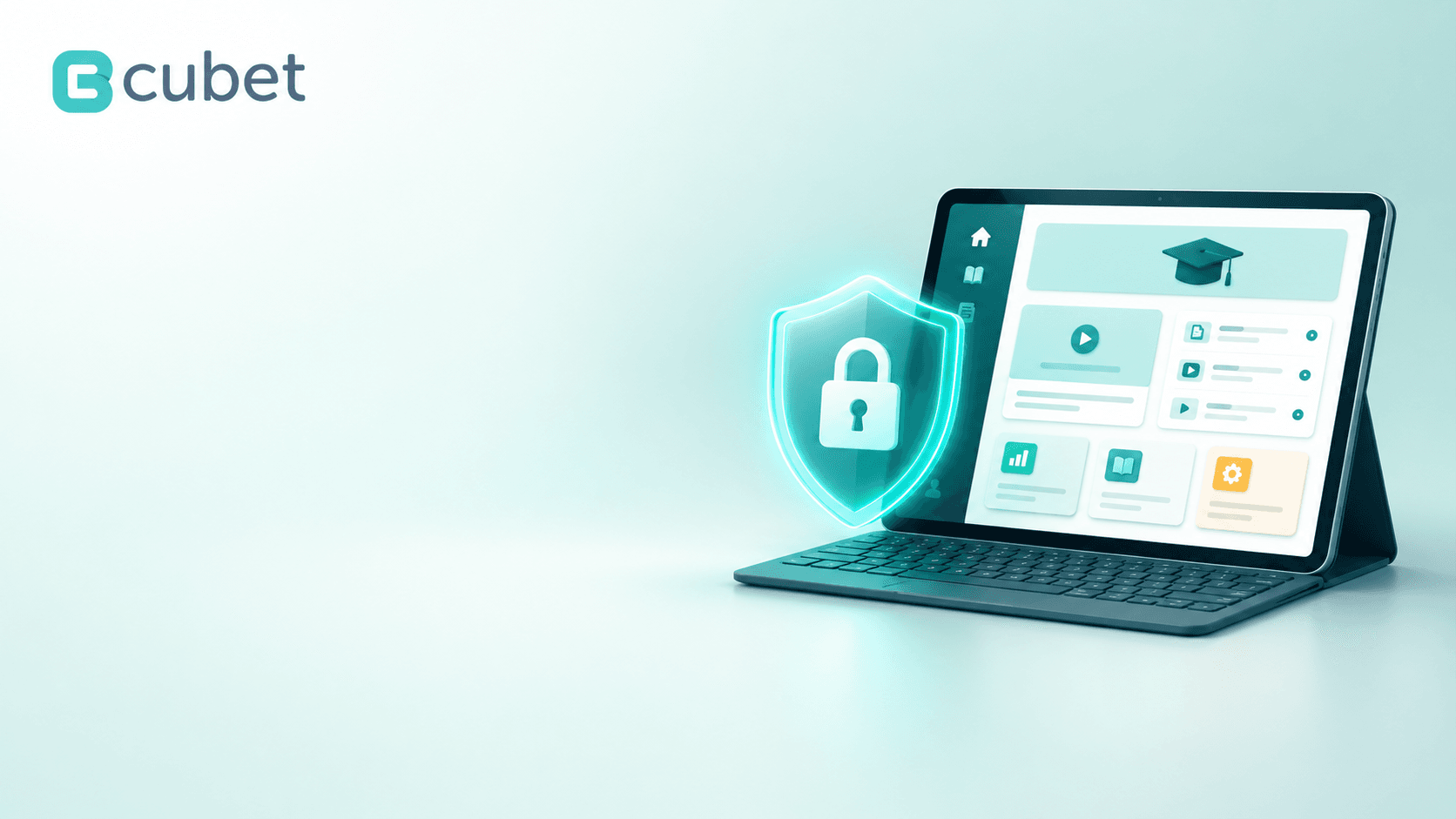
LMS Data Privacy and Compliance: What GDPR and FERPA Mean for Your EdTech Platform
An LMS is more than a place to upload courses and track learner progress. Modern platforms can store names, contact details, grades, attendance, assessment results, learning activity, and other personal information. For EdTech companies serving schools, universities, and businesses, protecting this information is essential to running a reliable platform.
Whether you are serving schools, universities, or corporate learners, achieving LMS data privacy compliance means the platform itself is not just a policy document but needs to function as a GDPR compliant LMS and a FERPA-compliant LMS.
The challenge becomes greater when an LMS serves customers in different countries. A European university may need the platform to support GDPR requirements, while a US school district may have to follow FERPA rules. Although these laws differ, both require EdTech companies to carefully manage how they collect, store, access, and share learner and student information. For EdTech businesses planning a new platform or upgrading an existing one, working with an experienced LMS development company that treats privacy as a design requirement, not an afterthought, can save significant rework later.
Why Data Privacy Matters for EdTech Platforms
Modern EdTech platforms handle a large amount of learner information. When an LMS serves multiple institutions, protecting this information becomes more complex because each customer may have different requirements for how its data is managed. The platform must also keep each customer's information properly separated. Getting this right is central to EdTech data privacy compliance, since a single misconfigured permission can expose one institution's learner records to another.
User permissions, access controls, and the underlying system architecture all play a role in ensuring that learners, teachers, and administrators only see information they are authorised to access. As the number of customers grows, managing these requirements manually can become difficult. This is why data privacy should be considered as part of the LMS architecture from the beginning rather than added later as a separate compliance requirement.
What GDPR Means for an EdTech Platform
GDPR is a European data protection law that gives people greater control over their personal information. It can also apply to organisations outside the EU in certain situations, including when they offer services to people in the EU. For an LMS provider, this means understanding what learner data is collected, why it is being used, where it is stored and who can access it.
When consent is the legal basis for processing personal data, the platform should be able to maintain appropriate consent records. An LMS should also support requests to access, correct or, where applicable, delete personal information.
Important areas for an LMS include:
- Data collection: Know what learner information is collected and why it is needed.
- Access controls: Make sure only authorised users can access personal information.
- Data requests: Support requests to access, correct or delete information where applicable.
- Data retention: Define how long different types of information should be kept.
- Data transfers: Apply suitable controls when information moves between countries.
What FERPA Means for an EdTech Platform
FERPA is a US federal law that protects the privacy of education records maintained by covered schools and educational institutions. It gives parents and eligible students certain rights to access and request changes to education records. It also generally limits the disclosure of personally identifiable information from those records, subject to specific exceptions.
For EdTech vendors, FERPA is not simply about adding a privacy policy to the LMS. An EdTech company may handle education records on behalf of a school or educational institution. Under the FERPA school official exception, certain conditions apply, including requirements related to the service provided by the vendor, the institution's control over the records, and how the information is used or shared.
This makes both the customer agreement and the platform's technical controls important. The LMS should give schools appropriate control over who can access student information and what those users can do with it. It should also maintain records that help the institution understand how information has been accessed, changed, or shared.
Key areas include:
- User permissions: Control who can access student records.
- Access management: Limit access based on user roles and responsibilities.
- Activity records: Keep records of important access and administrative actions.
- Data use: Handle information according to the applicable customer agreement.
- Information sharing: Control how student information is disclosed or shared.
What a Privacy-Ready LMS Architecture Looks Like
Privacy requirements can vary depending on the customer, country, contract, and type of data involved. However, a well-designed LMS can provide the technical foundation needed to support these requirements. Privacy and data protection should be built into the platform rather than treated as separate features. This is where custom LMS development makes a real difference. Instead of adapting a generic product, a custom-built platform can include tenant separation, role-based access, audit logging, and regional hosting from the first release.
Keep Customer Data Separate
Keep each customer's data separate and protected. User roles and access controls should ensure that learners, teachers, and administrators only see the information they are allowed to access.
Give Customers Data Location Options
Some customers may need their data stored in a specific country or region. Cloud infrastructure can help EdTech companies provide suitable hosting and storage options.
Keep Clear Activity Records
The LMS should record important activities so organisations can see what happened to their data. This can include:
- User logins
- Record access
- Data exports
- Permission changes
- Admin actions
These records can also help identify unusual or unauthorised activity.
Automate Data Retention and Deletion
As an LMS grows, managing data manually becomes difficult. Automated rules can help decide how long data is kept, when it should be archived, and what happens when a customer leaves.
For GDPR, deletion rules should follow the applicable legal and contractual requirements, as not all data can be deleted in every situation.
How to Check Your LMS Privacy Readiness
EdTech companies should review their platform before customers raise detailed questions about privacy and data protection. A proper review should cover the complete data lifecycle, from collection and storage to access, sharing, retention, and deletion.
Start by asking:
- What learner data does the LMS collect?
- Why is each type of data collected?
- Where is the data stored?
- Which customer does each dataset belong to?
- Can access be controlled by customer and user role?
- Can the platform show who accessed or changed information?
- Can different customers have different retention rules?
- How are backups handled?
- Which external service providers can access customer data?
- What happens to customer data when a contract ends?
The review should not stop at the main LMS application. Analytics systems, APIs, integrations, cloud storage, and backups can also contain learner information and should be included in the assessment.
Why Privacy Readiness Matters for EdTech Vendors
For EdTech companies, privacy readiness is not only about reducing data protection risks. It can also support enterprise sales and customer onboarding. Universities, school districts and large organisations may review an LMS provider's privacy, security and data-handling practices before selecting a platform.
A vendor that can clearly explain how its platform stores data, controls access, manages retention, and works with external service providers can make these discussions easier. More importantly, the technology should be able to support the privacy and security commitments made in customer agreements.
How Cubet Helps EdTech Platforms Modernize for GDPR and FERPA Compliance
Building privacy controls into an LMS is easier when they are considered as part of the platform architecture from the beginning. For EdTech businesses working with older systems, modernisation may be needed across applications, databases, integrations, and cloud infrastructure.
Cubet is an LMS software development company that approaches this as a platform modernisation challenge. Through legacy modernisation, existing LMS applications can be improved for better scalability, maintainability, and data control. Cloud migration can provide more flexible infrastructure and support different customer and regional requirements. With LMS development, privacy, security, and data management are built into the platform design from the start.
For EdTech platforms built on ageing infrastructure, legacy LMS modernization and cloud migration for education platforms are often the fastest paths to a genuinely GDPR compliant LMS and FERPA-compliant LMS — rather than trying to retrofit compliance onto a system that wasn't designed for it.
Frequently Asked Questions
What is FERPA compliance for an LMS?
FERPA compliance for an LMS means the platform supports the access controls, activity records, and data-handling practices required when a vendor manages education records on behalf of a school under the FERPA school official exception.
How do I make an LMS GDPR compliant?
Making an LMS GDPR compliant involves defining what learner data is collected and why, enforcing role-based access controls, supporting data subject requests, applying data retention rules, and controlling how data is transferred across borders.
Does my LMS need to be FERPA compliant?
Any LMS handling education records on behalf of a US school or institution needs to be FERPA-compliant, since student data privacy protections apply to the vendor as well as the institution itself.

Mathews Abraham
VP - Revenue & Growth


Related Blogs

Get in touch
Kickstart your project
with a free discovery session
Describe your idea, we explore, advise, and provide a detailed plan.