Grocery Delivery App Development: A Detailed Guide

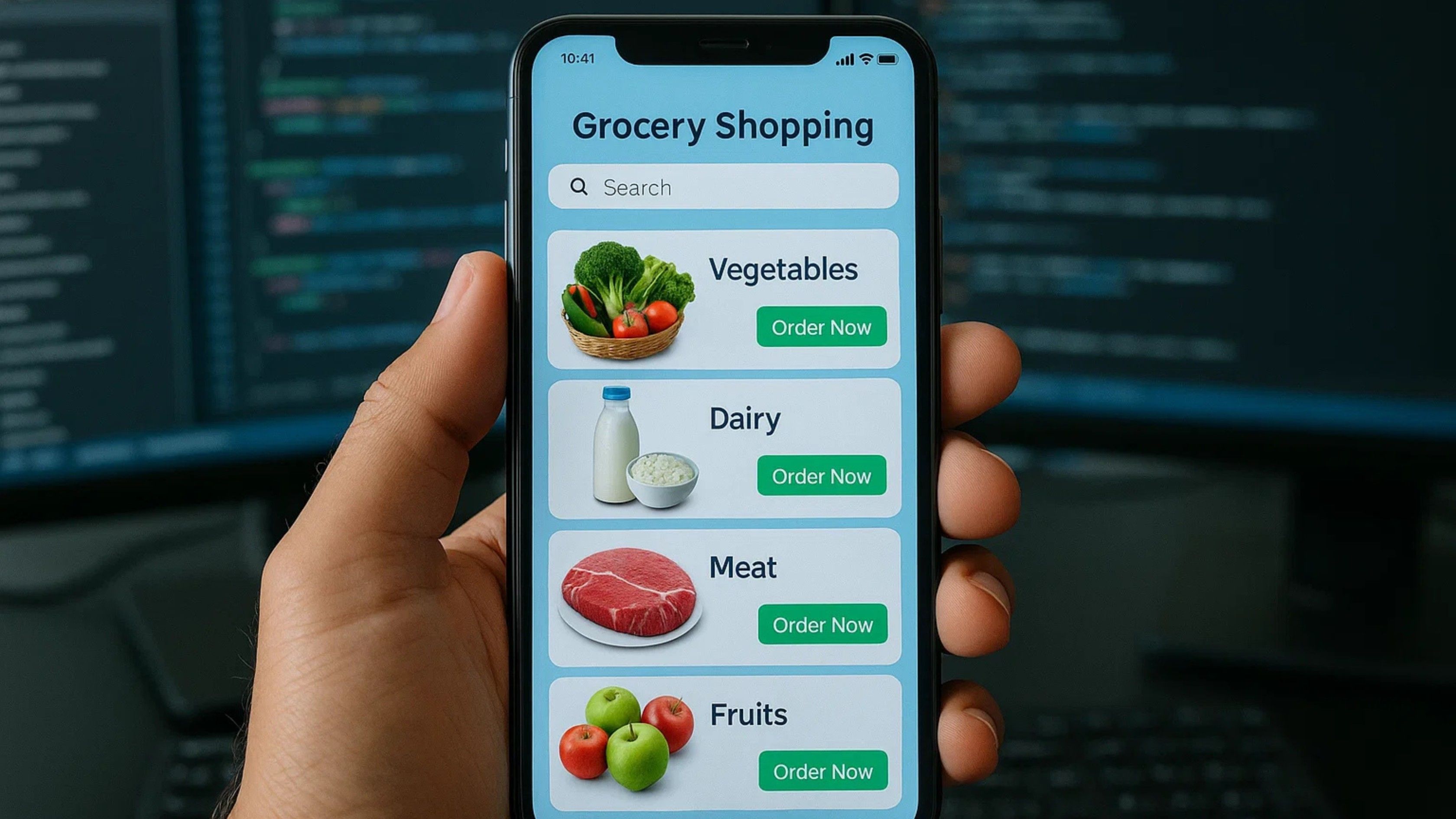
Grocery delivery has changed the way people shop. Instead of standing in queues or walking down aisles, customers depend on mobile apps to deliver essentials to their doorsteps. This shift has created a major opportunity for businesses ready to build strong digital platforms. Cubet approaches this space with a technology-first mindset, combining modern engineering, AI, machine learning, and cloud-native architectures to help companies launch scalable and future-ready grocery delivery applications.
What A Grocery Delivery App Really Is
The grocery delivery app is a mobile-first digital platform that lets customers browse items, compare prices, place orders, make online payments, and track deliveries in real time. It acts like a digital storefront, backend operations hub, and delivery management system all in one. Cubet develops these systems with secure frameworks, intelligent recommendations, and cloud-based infrastructures that enhance user experience and business performance.
- Serves as an online marketplace with digital product catalogs
- Makes searching, filtering, and browsing easy for customers.
- GPS-based real-time delivery tracking is included.
- Uses AI and ML for personalized recommendations.
- Supports digital payments using secure gateways
- Provides full visibility of orders and stocks for businesses.
- Works in on-demand, scheduled, and hybrid delivery modes
- Reduces store crowding and increases operational accuracy
Step 1: Planning and Research
According to Cubet, planning is at the core of every grocery delivery application development. Understanding the landscape, customer expectations, and internal business needs allows the development team to design a platform that performs reliably and scales smoothly.
- Conduct market research on competitors and identify user pain points.
- Analysis of customer behavior patterns and purchase trends
- Gap Identification based on Review Analysis and Features Expected
- Definition of core features such as search, cart, checkout, and tracking
- Choice of Business Model based on Store Structure and Logistics Readiness
- Android, iOS, or cross-platform development decision
- Selection of backend technologies like Node.js, Python, or Java
- Cloud architecture planning on AWS, Google Cloud, or Azure
Step 2: App Designing and Development
Cubet focuses on the development of interfaces that are simple and intuitive to the user, with a backend strong enough to withstand high-volume usage. This translates into clean layouts, smooth navigation, and secure systems forming the core of every design decision.
Smooth UI and UX
Perfect UI/UX design for a smooth user experience will keep customers engaged and encourage repeat orders. Designs are created with clarity, ease of navigation, and minimal clutter, with security in place during payment and data interaction.
- Intuitive layout for users who have limited technological knowledge.
- Simple navigation paths that reduce confusion
- Fast-loading pages and light animations
- Secure checkout flow with validated form inputs
- Optimized screens for both mobile and tablet devices
Separate Interfaces for Each User Type
A grocery delivery ecosystem has multiple users. Cubet develops separate applications and dashboards for customers, delivery
personnel, and administrators in order to make the system efficient.
Customer App
- Product browsing with filters and categories
- Digital payments with automated invoice generation
- Order tracking with live GPS updates
- Coupons, wallet options, and reward features
- Quick reorder using the history
Delivery Personnel App
- Order assignment and acceptance options
- Integrated navigation and route suggestions
- In-app customer communication
- Delivery status updates
- Proof-of-delivery submission
Admin Panel
- Inventory management and updates in real time.
- Product listing controls and pricing configuration
- Order analytics and performance dashboards
- Delivery zone mapping
- Complaint management and support handling
Integration of Core Functionalities
We integrate all the core features, which work flawlessly even in heavy usage. These functions provide seamless transactions to both the customer and business each time.
- User profile creation and secure authentication
- Product management with category mapping
- Shopping cart with updates to quantity and price
- Secure payment gateway integration
- Real-time delivery tracking with map APIs
- Push notifications for order updates
- Data analytics for business decisions
Step 3: Testing and Launch
Testing standards at Cubet are very strict to ensure every feature works consistently on devices and networks. That gives a non-painful performance post-launch and long-term usability.
Quality Assurance
Testing encompasses performance, security, usability, and compatibility. Each module of the system is tested for stability and reliability.
- Performance Testing under High Traffic
- Cross-device end-to-end functionality testing
- Payment and checkout flows verification
- Cart and price calculation accuracy checks
- Testing under weak network conditions
- Security testing to prevent vulnerabilities
Launch Process
Upon the app's passing of all tests, Cubet prepares the platform for deployment onto app stores with optimization of visibility.
- Deployment to Google Play Store and Apple App Store
- Listing of apps with optimized descriptions
- Upload of screenshots and promotional visuals
- Creating release notes for end-user documentation
- Monitoring Early User Activity Following Launch
Marketing and Promotion
An efficient launch strategy contributes to gaining early visibility and engagement with an application.
- Awareness promotion via social media
- Referral programs that incentivize sign-ups
- Initial discount campaigns
- Email campaigns targeted at local audiences
- Partnerships with local stores for credibility
Step 4: Ongoing Maintenance and Enhancements
Grocery delivery applications keep evolving with time. Cubet ensures continuous support and upgrades to keep the platform up-to-date, competitive, and aligned with customer expectations.
- Regular addition of new features
- Performance-Enhancing Updates
- Fixes for bugs found in real-world usage
- Security updates to meet compliance requirements
- User feedback evaluation
- Continuous UX improvement
- AI model training for better recommendations
Market Trends that Influence Grocery Delivery App Development
Research on the latest market trends is essential, as they directly shape how grocery delivery apps are designed, developed, and optimized for customer needs.
Rapid Market Growth
The global online grocery marketplace is growing rapidly. Customers want mobile-first convenience, so this is a good time to invest.
- Strong adoption of mobile commerce
- More confidence in online payments
- Time-saving behavior across customer segments
- Higher willingness to reorder digitally
High Competition
Competition arises from both global and regional players. Differentiation is based on speed, accuracy, and user experience.
- Presence of major global brands
- Rising regional startup
- Fast delivery is important
- Need for stable app performance
Demand for Instant Delivery
Customers want rapid fulfillment. That means efficient route optimization and inventory planning.
- Increasing preference for one-hour deliveries
- Dependence on real-time logistics tracking
- Need for micro-warehousing and smart routing
- Importance of Strong Delivery Coordination
AI-Based Personalization
AI helps make customers' shopping experiences relevant through better product suggestions. Cubet incorporates machine learning models that improve personalization.
- Behaviour tracking using AI models
- Personalized recommendations
- Predictive ordering suggestions
- Identification of purchasing patterns
- Improved Customer Satisfaction
Sustainable Operations
The increasing interest in eco-friendliness is directly influencing business decisions.
- Preferable packaging options
- Focus on a reduced carbon footprint.
- Optimized routes for lower emissions
- Interest in recyclable materials
Why Partner with Cubet for Grocery App Development
Cubet crafts high-performance digital products backed by deep technical expertise. The company uses AI, machine learning, cloud-native architectures, secure engineering practices, and industry knowledge to help businesses build grocery delivery apps that scale smoothly and stand strong in competitive markets. Right from end-to-end involvement in UI design to backend development, quality assurance, and long-term upgrades, Cubet ensures that every application becomes reliable, intelligent, and future-ready. Schedule a call with our expert to discuss your needs to build a perfect and user-friendly grocery delivery app.
Have a project concept in mind? Let's collaborate and bring your vision to life!
Connect with us & let’s start the journey
Share this article

Akhilesh P V
Assistant Operations Manager





Get in touch
Kickstart your project
with a free discovery session
Describe your idea, we explore, advise, and provide a detailed plan.