Growing Through Every Opportunity: Amal Tomy Shares His Journey
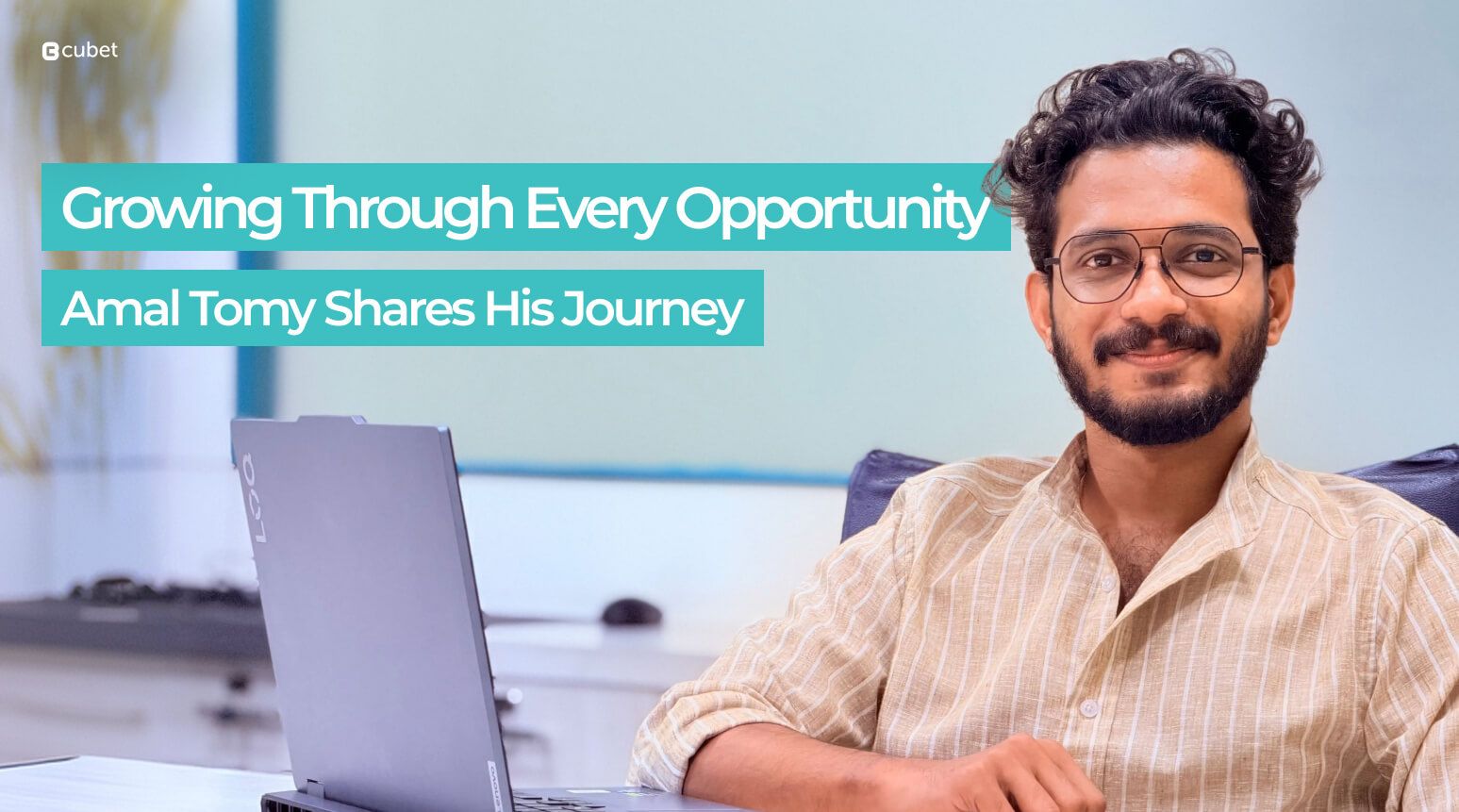
Going through Amal's journey from being an intern to being a full-fledged AI professional in a span of a few months. This is Amal, Cubet's latest in the line of young and motivated talents who believe in progress built on sheer audacity to learn. These are the exact words of Amal Tomy, a budding talent at Cubet, who, with his spontaneous tenacity to learn and solve problems, has made himself into an indispensable asset at Cubet.
Tell us a little about yourself. What first sparked your interest in software development, and what made you decide this was the career you wanted to pursue?
I'm currently a Junior Software Engineer in the AI/ML team, where I work on AI projects using a variety of frameworks and technologies. What first drew me to software development was the excitement of turning an idea into something real. I still remember the satisfaction of building my first working application. It showed me how rewarding it was to solve problems through technology. That experience sparked my curiosity, and since then, I've always wanted to keep learning and build software that people genuinely find useful.
Every career has a starting point. What made you choose Cubet for your internship, and what were your expectations as you walked into your first day?
What stood out to me about Cubet was the opportunity to work on real projects rather than just training exercises. I felt that working alongside experienced developers would help me learn much faster and give me exposure to how software is built in a professional environment.
On my first day, I was excited but also a little nervous. While college gave me a solid foundation, I knew working in a software company would be a completely different experience. I was eager to understand how products are developed, how teams collaborate, and what it takes to deliver quality software for clients.
Looking back at your first few months, what was the biggest adjustment from college projects to working on enterprise software? Was there a moment that really challenged you?
The biggest adjustment was realizing that software development isn't just about making something work. In an enterprise environment, you're contributing to a much larger product, where your code needs to integrate well with what everyone else is building. That shift in mindset was one of the biggest learning experiences for me.
One of my earliest challenges was working with AI frameworks like LiveKit and OpenClaw while also getting familiar with an existing codebase. At first, it felt overwhelming because everything was new. I spent a lot of time reading documentation, exploring the code, and experimenting with different approaches before it all started to make sense.
Looking back, those first few weeks taught me an important lesson: it's okay not to know everything. As long as you're willing to learn, ask questions, and keep exploring, you'll eventually find your way.
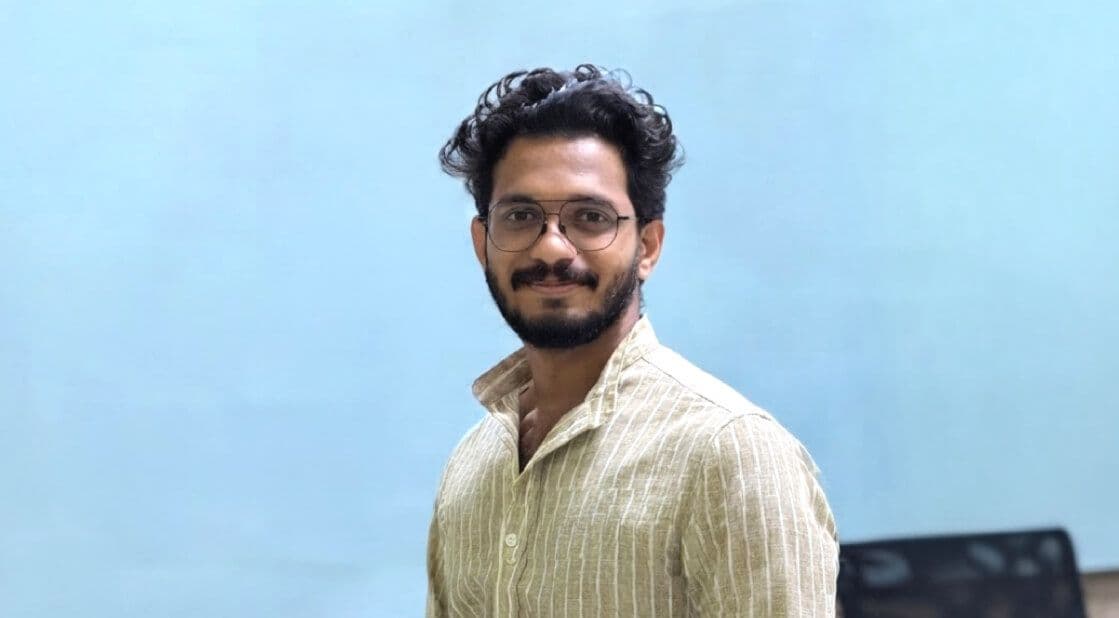
You made the transition from intern to Junior Software Engineer quite quickly. Looking back, what experiences, people, or moments contributed most to your growth?
I think the biggest factor was having the opportunity to work on real projects from the very beginning. Every new task challenged me to learn something new, and each experience helped me grow a little more.
The people around me also played a huge role in my development. Code reviews, technical discussions with senior developers, and even small pieces of feedback helped me improve my approach to problem-solving and writing better code. Over time, I became more confident—not because the work became easier, but because I became more comfortable learning, adapting, and growing with every challenge.
Can you share a project or experience that pushed you beyond your comfort zone? How did it change the way you approach learning and solving problems today?
Working on AI projects definitely pushed me beyond my comfort zone because many of the technologies and frameworks were completely new to me. In the beginning, I spent a lot of time trying to figure everything out on my own, which was both challenging and rewarding.
As I worked more closely with the team, I realized that asking questions isn't a weakness—it's one of the fastest ways to learn. That changed the way I approach new challenges. Today, when I came across something unfamiliar, I don't panic. I break the problem into smaller parts, do my research, experiment with different approaches, and ask for guidance when I need it.
Looking back, that shift in mindset has been one of the most valuable lessons in my journey so far.
Do you remember the first time you contributed to a feature that was actually used by a client or end user? What did that experience teach you?
Yes, and it's something I'll always remember.
Until then, most of what I'd built was for assignments or personal projects. This felt completely different because I knew that real users would be interacting with something I had contributed to.
That experience changed the way I think about software development. Instead of simply asking, "Does it work?" I started asking questions like, "Is it reliable?" "Will it provide a good experience for the user?" and "Have I considered different scenarios?" It made me realize that writing code is only part of the job—building software that people can depend on is what really matters.
Looking back, that was the moment I truly understood what it means to build software for the real world.
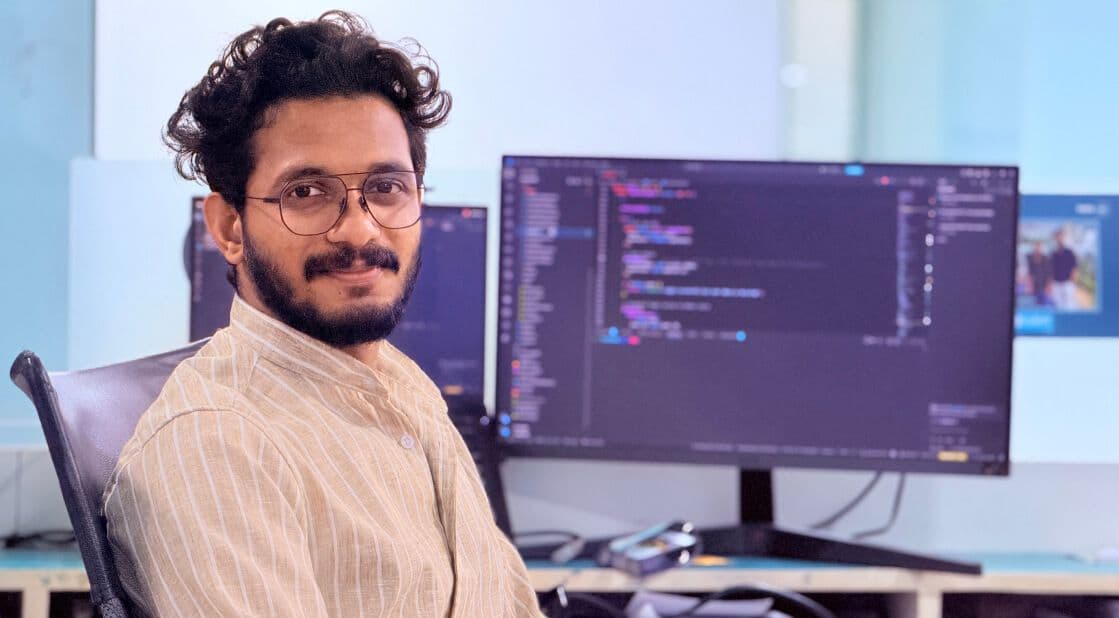
You were recently recognized as Employee of the Quarter. Looking back on your journey, what did that recognition mean to you personally?
Honestly, I didn't expect it, especially this early in my career.
It was a really meaningful moment because it showed me that the effort I'd been putting into learning, improving, and contributing was being recognized. More than the award itself, it gave me confidence that I was on the right path and encouraged me to keep growing.
It also reminded me that continuous learning and consistency matter. The recognition motivates me to keep challenging myself, contribute even more to the team, and make the most of every opportunity to learn.
If you could go back and give one piece of advice to yourself on your very first day at Cubet, what would it be?
I'd tell myself not to hesitate to ask questions.
In the beginning, I felt like I had to figure everything out on my own before asking for help. Over time, I realized that asking the right questions doesn't show a lack of knowledge, it shows a willingness to learn, and it helps you grow much faster.
I'd also remind myself not to worry about knowing everything from day one. Learning is part of the job, and every challenge is an opportunity to improve. Looking back, I'd simply tell my first-day self to stay curious, keep learning, and trust the process.
Finally, what would you say to students or fresh graduates who are about to begin their first internship or software development role?
Stay curious and never stop learning.
Don't be discouraged if anything feels new at the beginning; that's completely normal. Focus on improving a little every day, ask questions and don't let mistakes hold you back. Every developer goes through that learning phase, and it's an important part of the journey.
Looking back, I realized my internship wasn't just about learning new technologies. It was about learning how to collaborate with a team, take ownership of my work, and keep improving every day. If you approach your career with that mindset, the technical skills will come with experience.
A journey built on embracing what comes next
A striking example of what it truly means to commit to being the best. Every decision, every detail, and every interaction reflects an uncompromising standard of excellence. Rather than settling for what works, Amal continually refines what could work even better. It's a reminder that greatness is rarely accidental, it's the result of consistent choices made with intention, discipline, and an unwavering commitment to quality.



Get in touch
Kickstart your project
with a free discovery session
Describe your idea, we explore, advise, and provide a detailed plan.