Project Overview
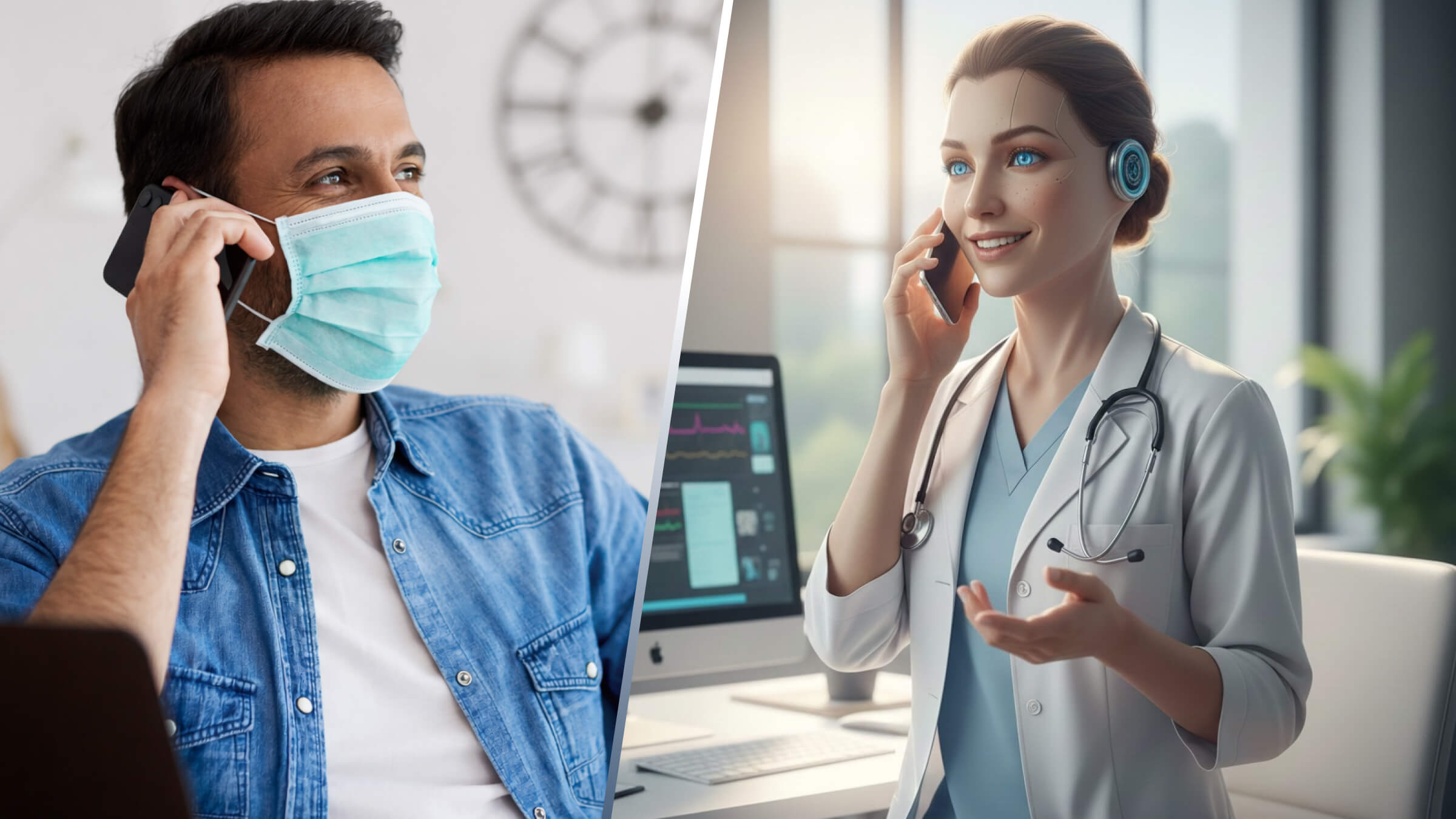
This project focused on automating post-discharge patient follow-up using real-time voice AI. The goal was to ensure every discharged patient received timely, consistent follow-up without increasing the operational burden on clinical teams. By integrating intelligentովին with the hospital’s existing systems, the solution enabled scalable, reliable, and personalised patient engagement beyond discharge.
Industry
Healthcare
Challenges Addressed
Post-discharge follow-up was largely manual and heavily dependent on staff availability. Coverage was inconsistent, particularly during peak periods, and conversations were often logged across multiple systems without structured, auditable records. Early indicators of post-discharge complications were sometimes missed, and scaling follow-ups required proportional increases in manpower—an unsustainable approach.
Hospital leadership needed a solution that could operate reliably at scale, integrate seamlessly with existing clinical systems, and still maintain a personal experience for patients.
Collaboration in Action
Cubet worked closely with the healthcare client to design a system that fit naturally within existing clinical workflows. Instead of introducing a standalone tool, the solution was built to integrate responsibly with patient portals and medical records, ensuring clinicians could focus on care while follow-ups happened automatically and consistently in the background.
Technologies Deployed
The solution was built on a modular, event-driven architecture designed to integrate with existing hospital systems without introducing operational or architectural risk. Key components included:
- Real-Time Voice AI layer for adaptive, natural patient conversations
- Whizz Agentic Orchestration Engine to manage dialogue flow, decision logic, and escalation paths
- Clinical Context Engine to inject patient-specific data such as procedure details, discharge notes, and risk indicators
- Secure integration layer using healthcare-standard interfaces (HL7 / FHIR compatible)
- Audit and logging layer to ensure traceability across conversations, decisions, and actions
Innovative Features
Once a patient is discharged, the system securely connects to the hospital’s patient portal and medical records. Configurable rules—based on procedure type, discharge notes, and risk profile—determine when and how follow-ups are initiated.
Whizz places a natural voice call, rather than using IVR or recorded messages. Conversations unfold in real time and adapt dynamically to patient responses. During each call, the system conducts structured follow-ups by checking recovery progress, confirming medication adherence, asking symptom-specific questions, and identifying discomfort, confusion, or early warning signs.
All interactions are securely recorded and transcribed, structured, and linked back to patient records. If risk indicators are detected, escalation is triggered automatically and care teams are alerted immediately.
Value Delivered
Operational Impact
- Significant reduction in manual follow-up workload
- Consistent outreach to all discharged patients
- Structured documentation without additional staff effort
Clinical Impact
- Faster identification of post-discharge issues
- Improved continuity of care beyond hospital discharge
- Better preparedness for follow-up consultations
Patient Experience
- Timely and reassuring communication after discharge
- No need to navigate apps or portals for basic follow-ups
- A more personal and responsive care experience
Security & Compliance Assurance
- Encrypted data flow between voice services and hospital systems
- Role-based access control with full audit trails
- Flexible deployment options including cloud, private cloud, or on-premise
- Patient data retained within defined clinical boundaries
User Feedback
The automated follow-up system enabled care teams to extend their reach without being stretched thin. Patients experienced consistent and reassuring communication after discharge, while clinicians benefited from structured insights and timely alerts without additional coordination effort.
Conclusion
This case study highlights a practical, operational application of AI in healthcare. By automating routine post-discharge follow-ups through real-time voice AI, the hospital transitioned from a reactive, staff-dependent model to a proactive, scalable care approach. Importantly, the solution did not replace clinicians—it extended their reach, ensuring no patient was left without follow-up while maintaining trust, oversight, and system stability.



Get in touch
Kickstart your project
with a free discovery session
Describe your idea, we explore, advise, and provide a detailed plan.