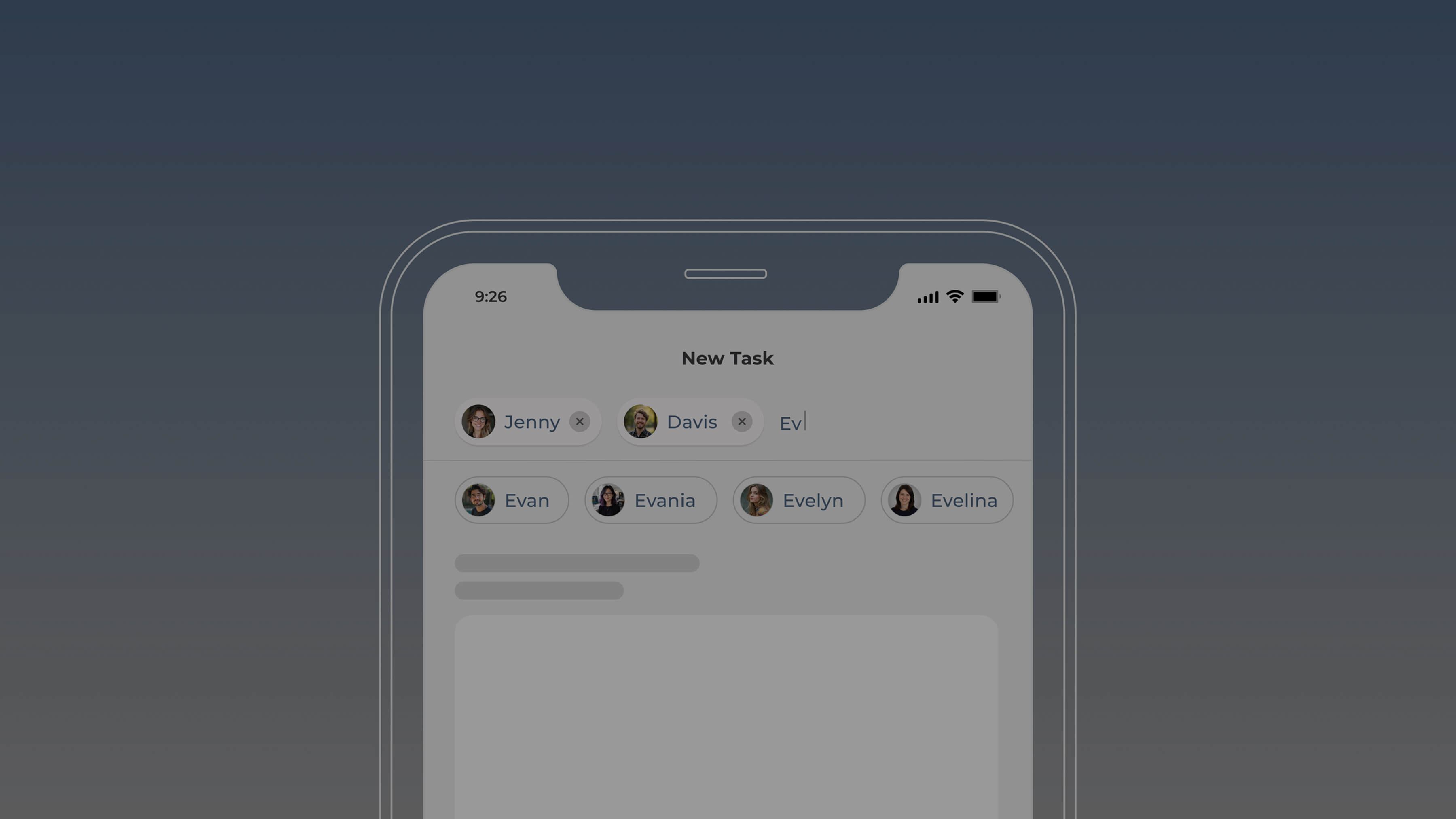
Ticket creation increased not because the process changed, but because the AI made the right action easier than doing nothing.
The Client
A market-leading enterprise SaaS company operating across Europe, providing compliance management platforms to large organisations in highly regulated industries. Their platform supports complex, multi-role workflows across legal, risk, and operational teams, managing processes where accuracy, accountability, and audit trail integrity are non-negotiable.
With an established client base spanning multiple industries and geographies, the company had built a platform that enterprises trusted for its reliability and governance depth. The challenge was not capability. It was making that capability accessible to the growing number of users who needed to work inside it every day.
Industry: Enterprise SaaS / Compliance Management
Geography: Europe
The Challenge: When Enterprise Compliance Workflows Break Down
The platform had everything it needed to work on. Years of workflow logic. Solid integration. Well-defined role structures and operational processes refined over time. The engineering was sound. The governance was tight. By every technical measure the system was doing its job.
But spend a day with the people using it and a different picture emerged. The friction wasn't dramatic. It never is with enterprise software. It was the quiet, daily kind. Extra clicks to reach something that should have been one step away, manual decisions that the system had enough context to make automatically, tasks that required users to already know the answer before the system would help them find it.
Ticket assignment was the clearest example. A routine task. A necessary one. But tedious enough that users quietly avoided it when they could. Tickets went unraised. Workflows were handled informally. Processes that existed in the system were being bypassed in practice, not out of negligence, but because following them took more effort than it should have.
In a compliance management environment this is not just a productivity problem. Bypassed processes mean incomplete audit trails. Informally handled workflows mean accountability gaps. The platform's usage data looked acceptable. The operational reality was not.
AI Integration Across Orchestration and User Experience
The brief was specific. Don't rebuild the platform. Don't simplify what it can do. Make it smarter about how it guides the people using it.
Cubet embedded an AI coordination layer directly into the platform, not as a separate assistant or a help tool bolted onto the side, but as a continuous intelligence layer connecting backend orchestration to the user experience in real time.
The system now reads context at every step. It knows who the user is, what role they carry, where they are in a workflow, and what typically happens next in that situation. It uses that knowledge to surface the right actions at the right moment, reducing the number of decisions a user has to make consciously and the number of steps they have to navigate manually.
Ticket assignment went from a task users constructed manually to one the system suggested and users confirmed. Navigation that required knowledge of the platform's structure became dynamic. The system generated the relevant entry points based on context rather than expecting users to find them.
In a compliance context this matters beyond convenience. When AI workflow automation guides users toward the correct process at the correct moment, compliance becomes the path of least resistance rather than the path of most effort. The right action and the easy action become the same action.
And crucially, it doesn't stay static. The AI learns from real usage patterns continuously. The more the system is used, the more accurately it predicts what a user needs next. Guidance that was helpful on day one becomes sharper by week four. More precise by month three. The system improves on its own, in production, without a redeployment or a manual update cycle.
The Outcome: Behaviour Changed, Not Just Speed
When the platform went live with the AI layer, the feedback was immediate.
Users didn't report that the system was faster. They said it felt different. The word that kept coming up was automatic. Things that used to feel manual now felt like the system was working with them rather than waiting for them to figure it out alone.
The most telling signal wasn't a satisfaction score or a support ticket reduction. It was a behaviour that nobody had explicitly set out to change.
Users started raising more tickets.
Not because they were asked to. Not because a process mandate changed. Because the friction that had quietly discouraged them from doing it was gone. The task that used to require navigation, judgment, and effort now required a single confirmation. So they did it. Consistently. Across every role on the platform.
For an enterprise compliance management platform this outcome runs deeper than productivity. More tickets raised means more processes documented. More processes documented means more complete audit trails. More complete audit trails means stronger compliance posture across every client the platform serves.
That is the outcome this project delivered, not a faster version of existing behaviour, but a change in behaviour that the platform had never been able to produce before. The right action became the easy action. And when that happens, people take it.
Continuous AI Learning in a Live Enterprise SaaS Platform
Most enterprise software implementations have a go-live date and a handover. This one has a growth curve.
Because the AI layer learns continuously from real usage, the platform's intelligence compounds over time. Patterns that weren't visible in the first month emerge in the third. Predictions that were directionally accurate at launch become reliably precise as the system accumulates context about how each role actually works, not how it was designed to work, but how real people do it every day.
For leadership this changes the value calculation entirely. The improvement delivered on day one is the floor, not the ceiling. Every week the system runs, it gets better at predicting what users need. Every week, the friction reduction deepens. Every week, the gap between what the platform is capable of and what users actually do closes a little further.
That compounding is what separates AI embedded into a system from AI added onto one.
What This Means for Your Enterprise SaaS Platform
Every enterprise SaaS platform accumulates intelligence over time, in its workflow rules, its role logic, its automation, its operational history. Most of that intelligence never reaches the user. It stays in the backend while users navigate the frontend on their own, making manual decisions the system already has enough context to make for them.
The gap between what your system knows and what it shows your users is where productivity leaks quietly every day. Where adoption stalls. Where good processes get bypassed not because people don't want to follow them, but because following them takes more effort than it should.
In regulated industries that gap carries a cost beyond productivity. Incomplete processes, informal workarounds, and under-documented workflows create compliance exposure that no platform governance layer can fully compensate for.
Closing that gap is not a redesign project. It is not a chatbot project. It is an AI product engineering project, one that requires the system to learn how your users actually work and continuously improve its guidance based on that reality.
When it's done right, the outcome is an enterprise SaaS platform that gets easier to use the longer it runs. Users who do more, not because they were trained to, but because the system made it natural. And operational results that improve week on week without a single additional intervention.
That is what Cubet builds.

Get in touch
Kickstart your project
with a free discovery session
Describe your idea, we explore, advise, and provide a detailed plan.