Your Software Is Costing You More Than You Think. Here's How We Fix It.
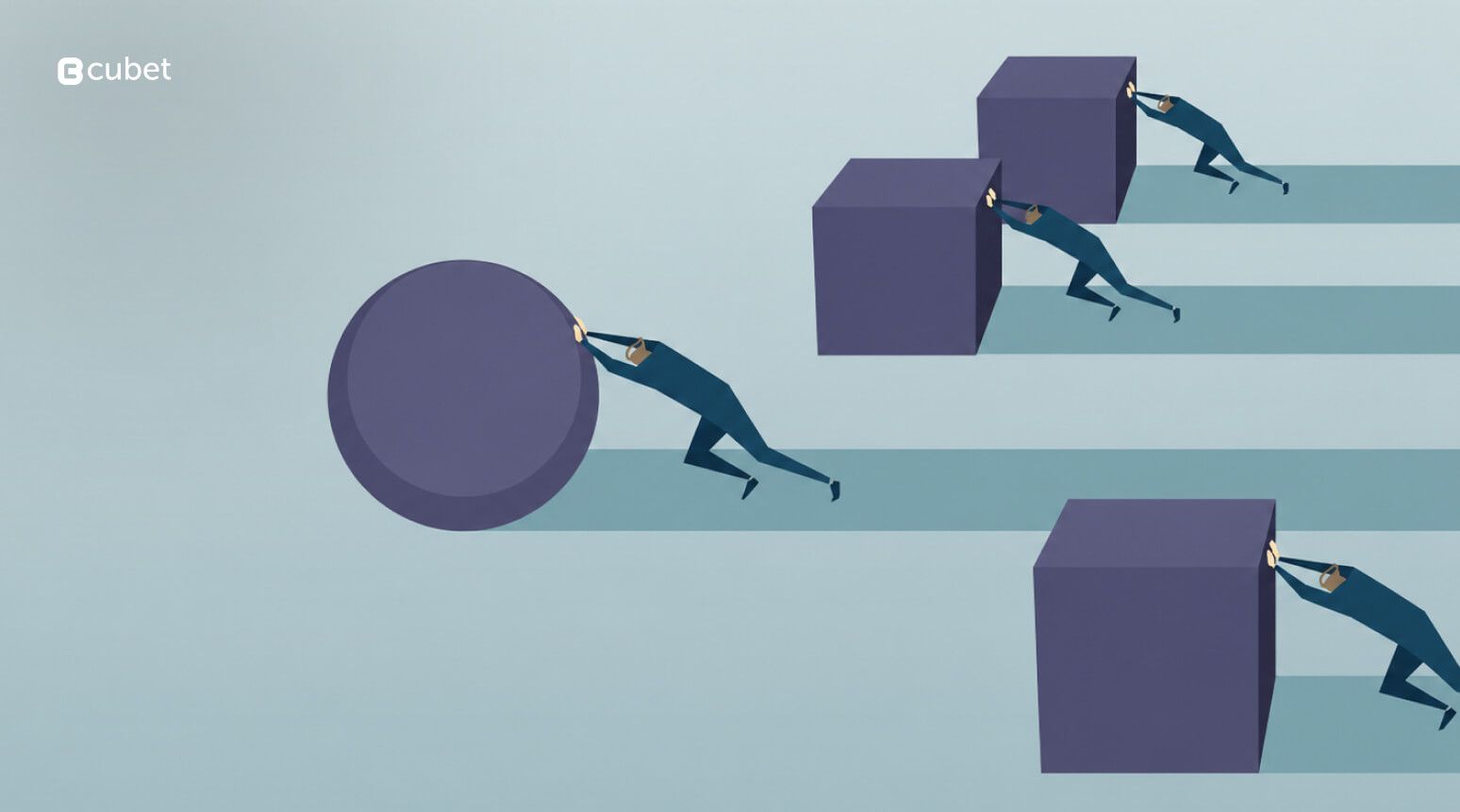
Your legacy systems might be lagging behind, and you might not know how much it’s costing you and your business this year.
We’re starting a week-by-week breakdown of what it actually takes to move legacy systems into the present. We’ll be going with the Arc foundations: what legacy software is really costing your business, why most companies underestimate that number by a wide margin, and so on.
By next week, we go a layer deep into infrastructure, the system everything else runs on top of, making sense of what modernisation entails for any business that needs to move ahead.
We've had some version of the same conversation with hundreds of technology leaders over the past many years. A CTO whose team is spending more time maintaining old code than building new features. A VP of Engineering who can't get a straight answer on why a two-week task keeps taking two months. A founder who just lost an enterprise deal because the security questionnaire exposed gaps the legacy platform was never designed to answer.
The details change. The underlying problem is almost always the same: software that made sense when the business was smaller, slower, or simpler, now running a business that has outgrown it entirely.
Software modernization is how you close that gap. Not by throwing everything away and starting from scratch, that's a path we've seen fail more often than it succeeds, and we'll explain why. But by transforming what exists: replacing what no longer works, preserving what does, and building the architectural foundation the next stage of the business actually needs.
The businesses that treat modernization as a strategic investment, rather than a project to survive come out of it faster, more secure, and ready to compete on capabilities their legacy stack could never support.
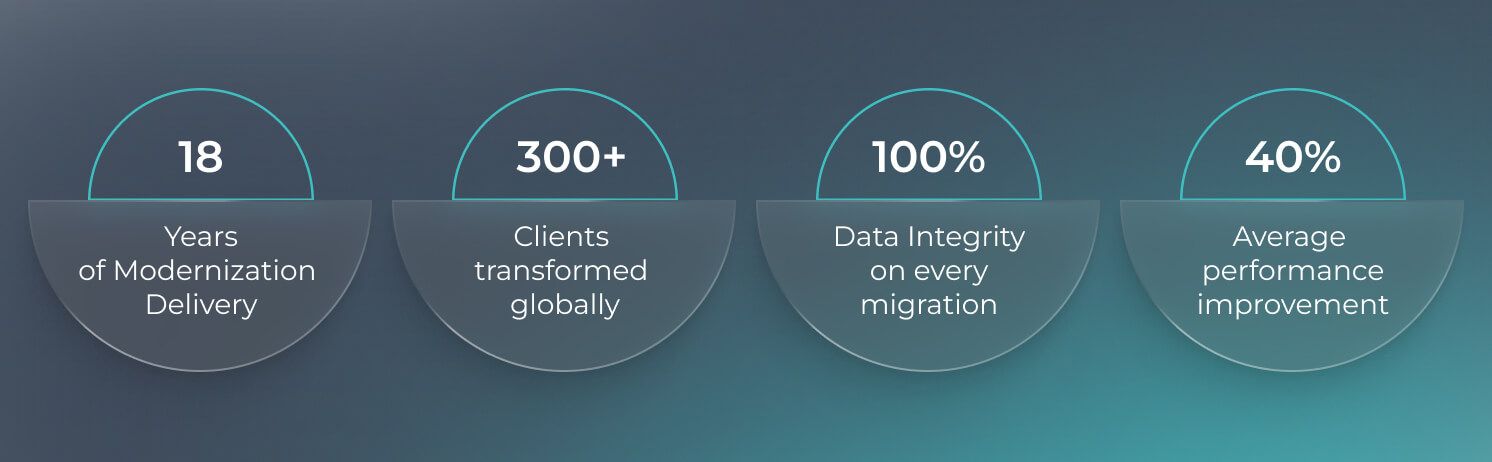
Cubet has been delivering software modernization for 18 years, across 300+ clients in healthcare, finance, SaaS, retail, manufacturing, education, and more. This is what we've learned about doing it well.
Why Modernization Can't Wait in 2026
The global application modernization market reached $24.39 billion in 2025 and is growing at over 20% annually (The Business Research Company). That growth isn't driven by trend-chasing. It's driven by enterprises across the US, UK, Middle East, Australia, and Europe hitting the same wall at the same time and realising that legacy infrastructure is no longer a technical inconvenience but a business constraint with a measurable commercial cost.
Here's what that cost looks like in practice. Engineering teams spending a third of their working week on maintenance instead of building. Senior developers leaving because they won't work on codebases they can't respect. Enterprise deals stalling because a security review surfaces gaps that a legacy authentication model was never designed to close. AI initiatives that succeed in proof-of-concept and fail in production because the infrastructure underneath them wasn't built to support them.
Industry benchmarks from Gartner, Forrester, and Deloitte consistently put legacy maintenance at 60 to 80 percent of total enterprise IT spend. That's the majority of a technology budget allocated to keeping the lights on, not to building the capabilities that generate competitive advantage.
The inflection point varies by business, but the direction is always the same: the longer modernization is deferred, the more expensive and disruptive it becomes. Technical debt compounds. Security exposure accumulates. The gap between what the architecture supports and what the business needs widens every quarter.
The Cubet view
We've seen every version of this delay — and we've never seen one that made the eventual modernization easier. The businesses that act before the crisis, with a clear roadmap and phased delivery, have a fundamentally different experience than those that act when the system forces their hand.
What We Actually Do: End-to-End Modernization Across Every Layer
Modernization isn't a product. It's a discipline, one that spans architecture, data, security, infrastructure, and product. The businesses that scope it narrowly, treating it as a cloud migration, or a compliance project, or a rewrite, typically find that fixing one layer exposes problems in the next. Cubet covers the full scope, so you work with one partner across the entire programme rather than stitching together vendors who don't share context.
Legacy Application Modernization
This is where most engagements begin. Systems built on PHP, COBOL, Visual Basic, aging .NET, or custom stacks with no surviving documentation, running in production because the business depends on them, and costing more every quarter to maintain. We assess what the system actually does (not just what it's supposed to do), identify what can be preserved and what needs to be replaced, and deliver a phased modernization roadmap before a line of code changes.
The approach depends on the system: re-platforming where the architecture is sound but the infrastructure isn't, re-architecting where the design needs to change, re-engineering where the platform needs to be rebuilt on modern foundations while preserving the business logic carefully extracted from the original. We've done this with COBOL systems running core financial transactions, PHP monoliths that had grown to eight-figure revenue platforms, and .NET applications from the early 2000s that no one at the client had fully read in years.
Database and Platform Migration
Database migration is the highest-stakes operation in enterprise IT — and the one where inadequate preparation creates the most expensive problems. Data loss, corruption, schema incompatibility, and downstream application breakage are real outcomes of migrations that weren't properly designed. We've taken over failed migration projects where teams had spent months on a cutover that left data inconsistencies that took longer to remediate than the original migration.
Our approach: schema analysis and dependency mapping before a row moves; data profiling to identify quality issues in the source before they're migrated into a new system; parallel environment testing at production data volumes; incremental migration with continuous integrity validation; and tested rollback procedures that can be executed in minutes. We've maintained 100% data integrity across every migration engagement in 18 years of delivery. That's not marketing, it's methodology.
Technical Debt Remediation
Technical debt shows up as features that take longer than they should, bugs that multiply faster than they're fixed, and engineers who spend time on workarounds instead of building. Stripe's Developer Coefficient report found that the average developer spends 13.5 hours per week, a third of their working time, on technical debt and maintenance. For a 20-person engineering team, that's nearly seven full-time engineers not building new value.
We audit the codebase, identify the high-debt areas that are actively degrading velocity and stability, build the test coverage that makes safe refactoring possible, and address debt systematically by business impact. We also put the automated quality checks and architectural guardrails in place that stop debt re-accumulating after the work is done. If you're heading into a fundraise, an acquisition, or an enterprise sales push, this is often the highest-leverage engagement available.
Security Hardening and Compliance Readiness
Legacy systems carry years of accumulated security exposure, and in regulated industries, the consequences are severe. Healthcare data breaches cost an average of $9.77 million per incident (HIPAA Journal), with legacy infrastructure as a primary contributing factor. For businesses operating in the US, UK, EU, Middle East, or Australia, compliance requirements have become a commercial gate, not just a regulatory obligation.
We audit, then fix. Zero-trust access controls, encryption at rest and in transit, API security hardening, and policy-as-code compliance enforcement. For clients targeting GDPR, HIPAA, SOC 2, or PCI-DSS — whether preparing for an audit, closing an enterprise deal, or responding to a security review — we close the gaps and produce the documentation that the process requires. The output is a system that answers the security questionnaire cleanly.
AI Enablement and AI-Ready Architecture
The most consistent AI failure pattern we see in 2026: a proof-of-concept that works beautifully in a sandbox environment, followed by a production deployment that fails because the infrastructure underneath the model was never designed to support it. The data is siloed, stale, or inaccessible in the format the model requires. The deployment pipeline doesn't handle model versioning. The system can't support the latency profile of real-time inference.
According to IBM, 75% of IT executives say legacy systems and accumulated technical debt are actively blocking their AI adoption plans. The architecture is the blocker, not the model.
When we modernize systems, AI readiness is designed in from the start: event-driven data pipelines that make real-time data available to models, feature stores that serve consistent data to training and inference, MLOps infrastructure for model deployment and monitoring, and API contracts that support model integration without tight coupling. This is what makes AI features ship to production rather than live permanently on the roadmap.
SaaS Product Modernization
SaaS products have a modernization urgency that enterprise IT programmes typically don't. The original architecture was designed for a different scale, a different customer profile, and a different security model than the business operates in today. As the product grows, the architecture becomes the constraint, on velocity, on the enterprise customers you can support, on the AI features the market expects, and on the security posture that enterprise procurement demands.
We re-architect SaaS products that have outgrown their original design: decomposing monoliths, hardening security and compliance posture, modernizing the deployment pipeline, and building the infrastructure that supports AI-native features. Without stopping the business that the current platform supports.
The User Experience Problem Nobody Budgets For
There's a version of legacy software that works perfectly well as infrastructure but slowly kills the business from the front end. The data flows. The transactions process. And every person who has to use it every day is working around it, copy-pasting between screens, maintaining personal spreadsheets because the system's reporting is too slow or too rigid, skipping features that exist but are too unintuitive to bother with.
This is the UX modernization problem. And it's more expensive than most technology leaders account for, because the cost shows up in places that don't look like technology costs: onboarding time for new staff, error rates in data entry workflows, customer drop-off on self-service journeys, and the quiet productivity drag of a workforce spending a fraction of every working day compensating for a system that wasn't designed for how they actually work.
What makes UX modernization technically complex in a legacy context, and where it differs from a standard design project, is that the interface in most legacy applications is tightly coupled to the backend. Business logic lives in the frontend. Workflow rules are embedded in navigation. Changing the UX isn't a matter of reskinning screens; it requires understanding the data model, the application state, the permission system, and every integration point that the current UI implicitly depends on.
We also integrate AI-driven UX enhancements as part of this layer: predictive inputs that surface relevant data before a user asks, natural language interfaces that let users query the system conversationally, and intelligent workflow suggestions that reduce the number of steps between a task and its completion. In 2026, users expect software to feel intelligent. Legacy UX modernization is how you meet that expectation without rebuilding the entire application.
AI Automation
Modernizing the architecture is what unlocks AI automation, and for most businesses, that's the part of the transformation that changes how the work actually gets done day to day.
60% of businesses already using AI cite legacy system compatibility as the primary barrier to going further. It's not a shortage of AI capability. It's a shortage of systems that can support it. Once the architecture is modernized — data pipelines clean, APIs properly structured, infrastructure cloud-native, the automation use cases that were previously blocked become executable.
What that looks like in practice varies by industry, but the patterns are consistent. Manual approval workflows that route through email become intelligent automation that reads context, applies business rules, and escalates exceptions without human routing. Data entry processes that rely on staff manually transferring information between systems become event-driven pipelines that move data automatically, with validation and error handling built in. Reporting that required an analyst to pull, clean, and combine data from multiple sources becomes a live dashboard that updates in real time.
When Cubet modernizes a system, AI automation readiness is part of the design — not something considered after the fact. That means event-driven architecture that makes business events available to automation logic in real time; workflow orchestration layers that coordinate actions across systems without brittle point-to-point integrations; RPA integration points for legacy systems that can't yet expose proper APIs; and the observability infrastructure that makes automated workflows auditable and debuggable when something unexpected happens. For clients in regulated industries, healthcare, finance, education, that auditability isn't optional. Automated decisions that affect patient care, financial transactions, or student records need to be traceable end to end.
The businesses that get the most from modernization aren't the ones that treated it purely as a technology upgrade. They're the ones that used it as the foundation to automate the workflows that were costing the most — and built systems that get more capable over time rather than more expensive to maintain.
How AI Has Changed What's Possible in Modernization
Beyond making modernized systems capable of supporting AI features, artificial intelligence has changed how modernization work itself gets done — and that matters because it affects both the speed and the risk profile of an engagement.
The most time-consuming and risk-prone part of any modernization programme has historically been understanding what an existing system actually does, especially when the engineers who built it are no longer available and documentation is minimal or absent. AI-assisted code analysis tools can scan large codebases, map dependencies, identify embedded business logic, and surface hidden coupling in a fraction of the time manual analysis requires. This directly reduces the category of failure where undocumented behaviour gets lost in translation during a migration.
Test coverage is the other major constraint. Legacy systems almost universally lack adequate automated tests — which is both a symptom of accumulated technical debt and the primary barrier to fixing it safely. You can't refactor code you can't test. AI-assisted test generation builds coverage faster and more comprehensively than manual test-writing, including edge cases that human writers consistently miss. What used to take months of careful test construction now takes weeks.
In large-scale database migrations, AI tooling brings automated anomaly detection in source data before migration begins, intelligent schema mapping across different data models, and validation at scale across datasets that would take weeks to validate manually. Post-migration, AI-driven performance profiling identifies bottlenecks with more precision than traditional approaches and surfaces optimisation strategies faster. The 40% average performance improvement we see post-modernisation is partly a product of this.
AI makes modernization faster and reduces specific categories of risk. It doesn't replace the architectural judgement and sequencing decisions that determine whether the programme succeeds. The combination — AI tooling applied within a structured, experienced delivery model — is what produces results at enterprise scale.
The Complex Challenges: Where Experience Is the Difference
Not all modernization challenges are created equal. Three categories account for most of the failures we see when clients come to us after a previous attempt didn't work — and they're worth understanding because they're where generic approaches consistently fall short.
When the database is the hardest part
A database migration sounds straightforward until you're looking at a 15-year-old operational system with 400 tables, undocumented relationships, 60 dependent applications, mixed data types, a decade of accumulated data quality debt, and a compliance requirement that prohibits any downtime. At that scale, every assumption has to be validated, every dependency mapped, and every edge case tested before anything moves in production.
The technical work is actually the more tractable part. The harder part is the data quality remediation that needs to precede it, cleaning source data so you're not migrating problems from one system to another and the coordination of the cutover across every downstream system that needs to switch simultaneously. Our migration methodology doesn't compress any of those phases. The record of 100% data integrity across 18 years of delivery is a direct consequence of not skipping steps under schedule pressure.
When the data is everywhere and nowhere
Most enterprises don't have a data problem. They have many data problems, distributed across systems that were never designed to communicate with each other. An estimated 62 billion data and analytics work hours are lost globally each year due to siloed data and analytic inefficiencies (Data and Analytics in a Digital-First World report). The business impact: decisions on incomplete information, AI initiatives blocked at the infrastructure layer, and a customer experience that feels fragmented because the data architecture is fragmented.
Resolving silos requires designing a data architecture that makes the right data available to the right consumers at the right latency — which looks different for operational systems, analytical workloads, and AI systems. Generic integration approaches create new dependencies rather than resolving the underlying problem. The architecture has to be designed for the specific data landscape of the business.
When the business can't stop while the work happens
The operational continuity challenge is the one that creates the most anxiety going into a modernization programme — and with good reason. The systems being modernized are the systems the business currently depends on. Transactions are being processed. Patient records are being accessed. Orders are being fulfilled. You can't take it all offline for six months.
The techniques that make this work: feature flags that allow new and legacy code to run simultaneously with controlled traffic, strangler fig patterns that incrementally replace legacy components without requiring a full cutover, canary deployments before full rollout, parallel environments with continuous synchronisation during migration windows, and off-hours execution for operations that can't be made zero-downtime. None of this is accidental — it's designed into the architecture before execution begins.
Every Industry. One Partner.
Legacy software is not an industry-specific problem, but the pressures that drive modernization and the constraints that govern how it can be done differ meaningfully by sector. Here's what we've learned from 18 years across all of them.
Healthcare
Healthcare modernization happens under regulatory conditions that most other industries don't face. HIPAA in the US, NHS Digital standards in the UK, and equivalent frameworks across the Middle East and Australia create compliance requirements that have to be built into the modernization architecture from the start. Clinical platforms, EMR systems, and patient data infrastructure are our most common healthcare engagements, each carrying the non-negotiable constraint that patient care cannot stop during migration. Our EMR cloud migration track record includes zero operational disruption across every engagement, with full compliance documentation produced alongside the technical work.
Finance and Banking
Core banking systems, transaction platforms, and regulated reporting infrastructure in financial services carry the highest modernization stakes of any industry. PCI-DSS, GDPR in the EU, FCA requirements in the UK, and FFIEC standards in the US create a compliance environment where migration has to be executed with full audit trail preservation and regulatory documentation that withstands scrutiny. Zero tolerance for data integrity issues in financial contexts is not a preference — it's an absolute requirement, and our methodology is built around it.
SaaS and Technology
SaaS modernization has a competitive urgency that other industries don't. When your product architecture is the constraint on feature velocity, and a competitor without that constraint is shipping twice as fast, the gap compounds every quarter. The most common engagement we run for SaaS clients: re-architecting monolithic products for enterprise readiness, AI-native feature support, and compliance posture that passes enterprise security reviews — often in the context of a growth-stage fundraise or an enterprise sales push where the architectural state of the platform is under direct commercial scrutiny.
Retail and E-commerce
Retail modernization is driven by the data volume and velocity demands of modern e-commerce, the integration complexity of omnichannel operations, and the AI-driven personalisation that customers across the US, UK, Australia, and Europe now expect as a baseline. Order management, inventory, and customer data platforms are the most common legacy constraints we see limiting retail growth — typically systems that were built for a scale and an integration landscape that the business has long since exceeded.
Manufacturing
Manufacturing modernization in 2026 is increasingly about connecting operational technology with business systems and AI-driven analytics: operational, supply chain, and quality management systems redesigned to support sensor data, event-driven workflows, predictive maintenance, and real-time supply chain visibility. This requires expertise in both industrial systems and modern data architecture — a combination that's less common than either discipline in isolation.
Education and EdTech
Learning management systems and student data platforms carry two specific modernization pressures: accessibility compliance and the AI-driven personalisation that learners and institutions increasingly expect. EdTech modernisation often involves untangling complex integrations with institutional identity systems and SIS platforms, each of which adds dependencies that have to be carefully managed during modernisation to avoid disrupting the learning experience.
Why Cubet: What 18 Years of Doing This Actually Looks Like
There are firms that will audit your legacy system and hand you a report. There are firms that will build you a new platform in isolation and leave you with a migration problem. What we do is different at both ends. Whether the system runs on COBOL, VB, aging .NET frameworks, PHP, Java EE, Oracle Forms, RPG
We work with systems others won't touch. COBOL, VB, aging .NET frameworks, PHP, Java EE, Oracle Forms applications from the early 2000s with no documentation, Systems that nobody at the client fully understands anymore. Eighteen years of delivery across 300+ clients means we've seen every variety of legacy complexity, and developed the assessment methodology to understand systems before we touch them, not during.
We fix, not just assess. A significant portion of the modernization industry is built on assessment and advisory work: audit, document, recommend, and hand the report to someone else to execute. We go further. Every engagement includes the remediation, re-architecture, migration, and validation. You get outcomes — performance benchmarks moved, security findings resolved, deployment frequency improved, not a list of things that need to happen.
We understand that business continuity is the constraint that matters most. The technical challenges of modernization are solvable. The operational challenge, keeping the business running while the systems it depends on are being transformed, is where most programmes create the most disruption. Every architectural decision we make has an explicit assessment of its continuity impact. Parallel environments, feature flags, and tested rollback plans aren't afterthoughts; they're part of the design.
We bring AI expertise into every modernization programme. Most modernization partners stop at the infrastructure layer. Cubet's team includes AI engineers, data engineers, and ML infrastructure specialists who work alongside the application and platform engineers. The systems we modernize aren't just cloud-native and secure — they're architecturally ready for the AI capabilities most of our clients are already planning to build.
The team behind every engagement
Solutions architects who specialize in legacy codebase analysis. Cloud engineers across AWS, Azure, and GCP. Database migration specialists with every major platform. Security engineers who implement rather than just recommend. AI and data engineers with production ML infrastructure experience. Full-stack engineers across React, Angular, Vue, Node.js, Laravel, Python, and .NET. All embedded with your team, not over it.
How We Work: Assess First, Build in Phases, Measure Everything
Every Cubet modernization engagement follows the same structure, because we've spent 18 years learning what produces consistent results and what doesn't.
We start with a technical assessment before anything else. We look at the codebase, the architecture, the data model, the integration landscape, and the security posture. We talk to your engineers about where the real pain is. We talk to the business about what the current systems are preventing. The output is an honest modernization roadmap: what needs to change, in what order, why, and what the business impact of each phase is. No technology choices before we understand the system. No generic recommendations. This assessment is free — because starting without it consistently produces worse outcomes.
We work in phases, each with locked scope and defined success criteria. Performance benchmarks. Data integrity figures. Security findings count before and after. Deployment frequency metrics. You see the numbers move at the end of each phase — not a list of what we worked on. Phases are typically 6 to 12 weeks. Larger programmes run multiple streams in parallel. Early phases are designed to deliver visible, measurable value — both to build confidence in the programme and to surface any assumptions that reality revises.
We embed with your team, not over it. Engineers document what they build, explain architectural decisions in context, and transfer knowledge throughout the engagement. The goal is that your team ends the programme understanding the new system deeply and able to maintain and extend it — not dependent on Cubet to maintain what we built.
What This Looks Like in Practice
A finance platform that kept failing enterprise security reviews
A US-based finance consulting firm's lease audit platform was built on legacy PHP, had accumulated years of technical debt, and had failed three consecutive enterprise security reviews. The platform was blocking the sales pipeline — deals were getting to contract stage and stalling when the security questionnaire exposed gaps the architecture couldn't answer.
We re-architected and rebuilt it as a secure Laravel and Vue.js application on AWS, with real-time reporting, cloud-native deployment, and zero data loss during migration. Reporting time dropped by over 60%. The platform now passes enterprise security reviews that the legacy version consistently failed, and the sales team can close deals that the old architecture was costing them.
A healthcare provider's EMR infrastructure — migrated to cloud, zero disruption
A healthcare provider needed to move its on-premise EMR infrastructure to the cloud while maintaining full HIPAA compliance and zero operational disruption during the migration window. Patient care could not stop; data integrity was a regulatory requirement, not just a preference.
We migrated the infrastructure with no data loss, no downtime during clinical operations, and full compliance documentation produced alongside the technical work. Improved scalability and security posture for a growing patient base, with the system now positioned for the cloud-native analytics the clinical team had been asking for.
A UK facilities management company — from legacy to cloud-native operations
A UK facilities management company's legacy systems were constraining operational efficiency, limiting mobile capabilities, and running on infrastructure that couldn't support the real-time tracking the business needed. We replaced the legacy platform with a cloud-native system featuring advanced mobile capabilities, real-time tracking, and modern CI/CD deployment pipelines. Measurable operational efficiency gains within the first quarter post-launch.
→ View all case studies: /resources/case-studies/
Questions We Hear Most Often
How do we know if we need modernization, or if we just need to work differently?
The distinction matters. Better processes can reduce the pain of a legacy system, but they can't fix architectural constraints. The test: is the constraint in how people are working, or in what the architecture physically allows? If features can't be built because the monolithic design requires coordinating too many components, or if AI features can't reach production because the data architecture doesn't support them, or if enterprise deals stall because the security model can't answer the questionnaire — those are architectural constraints. That's a modernization problem.
We've been told we need a full rewrite. Is that actually the right answer?
Rarely. Full rewrites are appealing because they seem clean — start fresh, no legacy constraints. In practice they almost always take longer and cost more than estimated, because the business logic embedded in the legacy system has to be rediscovered during the rewrite rather than understood before it begins. We've taken over multiple failed rewrite projects where teams spent 12-18 months on a greenfield rebuild and still couldn't match what the legacy system did. Most modernization programmes we run preserve significant parts of the existing system and replace what needs to be replaced, incrementally, with explicit testing at each step.
What happens to our live operations during modernization?
This is the right question to ask any modernization partner — and you should expect a specific answer, not a reassuring one. The way we handle it: feature flags that allow new and legacy code to run simultaneously with controlled traffic between them; parallel environments during migration with continuous data synchronisation; canary deployments before full rollout; and tested rollback procedures that can be executed in minutes. These aren't afterthoughts — they're designed into the modernization architecture from the beginning. When they are, programmes run alongside normal operations without disrupting them.
How long does software modernization take?
Targeted engagements — a specific database migration, a security audit and remediation, a defined technical debt sprint — typically run 6 to 12 weeks. Larger programmes spanning multiple systems or full platform re-architecture run 3 to 9 months in phases. The right answer depends on scope, which is why assessment comes first. What we can say: phased delivery means you see results before the full programme is complete. You're not waiting 9 months to find out whether it worked.
We tried modernization before and it failed. What makes Cubet different?
Almost every failed modernization we've seen had one of a small number of root causes: technology choices made before business outcomes were defined; a big-bang rewrite scope that uncovered more complexity than estimated; inadequate assessment of the legacy system before work began; or scope expansion that ran out of stakeholder patience and budget. Our methodology is built specifically around these failure patterns — assessment first, business outcomes before technology, phased delivery with locked scope, and data strategy as a first-class workstream. The 18-year record and 40% average performance improvement post-engagement reflect a process refined specifically to avoid the failures you've already experienced.
What compliance frameworks does Cubet cover — GDPR, HIPAA, SOC 2, PCI-DSS?
All of them — and compliance is built into the modernization architecture, not retrofitted at the end. Our security engineers implement zero-trust access controls, encryption at rest and in transit, API security hardening, and policy-as-code enforcement. For each framework — GDPR for EU and UK data processing, HIPAA for US healthcare, SOC 2 for enterprise SaaS, PCI-DSS for payment environments — we close the specific gaps and produce the documentation audits and enterprise security reviews require. We operate across all major regulatory environments: US, UK, EU, Middle East, and Australia/APAC.
Where does Cubet deliver modernization services?
Globally — with clients across the United States, United Kingdom, Middle East and UAE, Australia, Europe, and India. Our delivery model supports clients across time zones through a combination of embedded engagement and distributed engineering. Compliance expertise covers US (HIPAA, SOC 2, PCI-DSS), EU and UK (GDPR, FCA), and regional requirements across the Middle East and APAC.
The Right Next Step
If something in this piece resonated, if the symptoms sound familiar, or the failure patterns match an experience you've had, the most useful thing to do is talk to someone who's done this at the scale and complexity of your system.
That's what the free technical assessment is for. We'll review your application portfolio, tell you honestly what we find, and give you a phased roadmap before you commit to anything. If the assessment reveals that what you need is better processes rather than a modernization programme, we'll tell you that too.
18 years. 300+ clients. Healthcare, finance, SaaS, retail, manufacturing, education — across the US, UK, Middle East, Australia, Europe, and India. If your software is holding the business back, we know how to fix it.
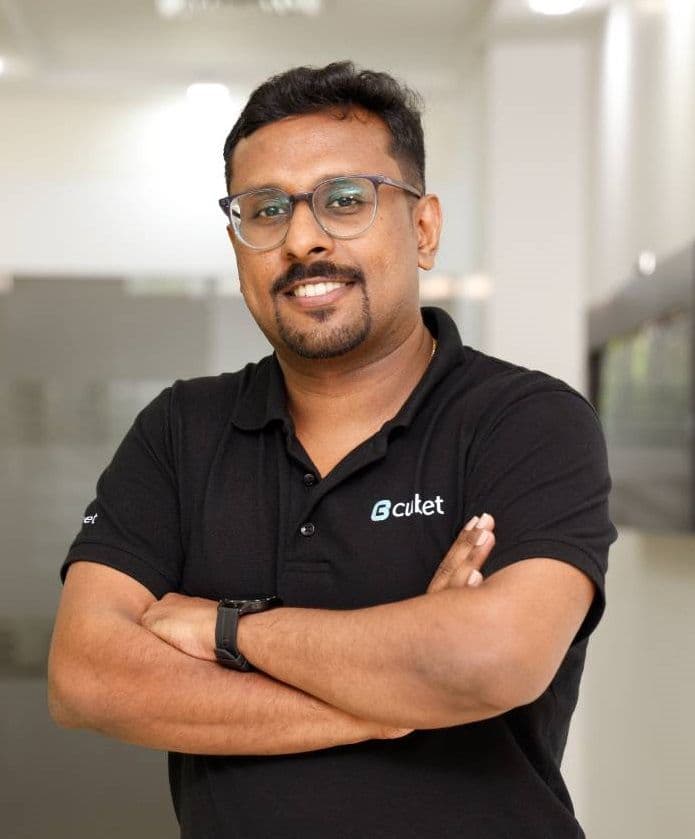
Mathews Abraham
VP - Revenue & Growth





Get in touch
Kickstart your project
with a free discovery session
Describe your idea, we explore, advise, and provide a detailed plan.