Triple Track Methodology: What Is Actually Missing from Your AI Product Process

Dual Track Was Never Built for AI
Dual Track Agile has served product teams well for years. The model separates work into two parallel streams: Discovery, which determines what to build, and Delivery, which executes the build. For most software products, that division is both practical and effective.
The difficulty is that AI is not most software.
With conventional products, getting the problem definition right and executing it competently is generally sufficient. If the logic is sound and the build is clean, the product works as intended. AI invalidates that assumption. Because AI systems learn from data rather than simply following instructions, they introduce a variable that Dual Track was never designed to account for.
Poor data. Insufficient data. Biased data. Any one of these can undermine a product that was otherwise well-conceived and well-executed. The problem was correctly identified. The build was technically sound. But the output is unreliable, and the reasons are not immediately apparent.
That is the gap Triple Track is designed to address.
The Resume Screening Problem Nobody Wants to Talk About
Consider a straightforward illustration of where Dual Track falls short.
A team develops an AI tool to screen resumes and reduce recruiter workload. Discovery is conducted properly: the problem is genuine and worth solving. Delivery proceeds without issue: the model is built and shipped on schedule.
What the team did not account for is that the training data reflected historical hiring decisions that were themselves biased. The model learns those patterns and replicates them at scale. Strong candidates are filtered out. Recruiters lose confidence in the system. The tool becomes a liability rather than an advantage.
Nothing failed in Discovery. Nothing failed in Delivery. The data track was simply never considered, and that omission is what determined the outcome.
What Triple Track Actually Adds
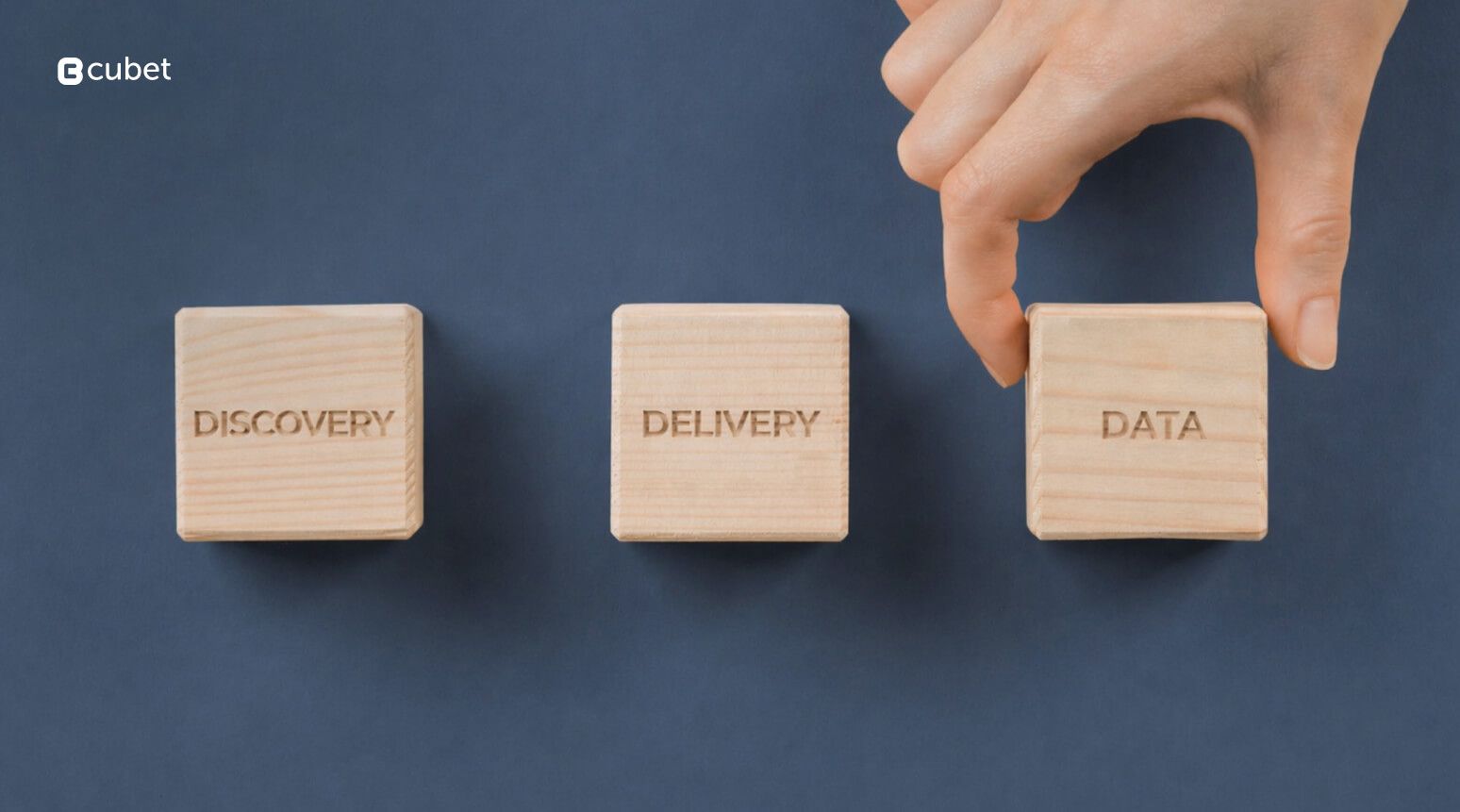
Triple Track preserves the Discovery and Delivery tracks and introduces a third, parallel track: Data. Not as a preparatory phase, and not as another team's responsibility, but as an active, continuous discipline that runs alongside the other two and informs both of them throughout.
Discovery, Data, and Delivery operating in parallel rather than in sequence.
The reasoning is direct. Discovery can validate the right problem to solve, but if the data powering the solution is flawed, the solution will not perform as intended. Delivery can ship a technically robust product, but without active monitoring of how the model behaves in production, performance will quietly degrade. Data is the connective tissue of any AI product. Treating it as secondary is what causes otherwise well-designed AI initiatives to fail.
Discovery: The Questions Worth Slowing Down For
A recurring pattern in AI projects is the tendency to move too quickly toward a solution. The technology is compelling, the use case appears strong, and before long a team is committed to building something complex before the underlying problem has been clearly defined.
Triple Track addresses that instinct directly. Before anything is built, certain questions require honest answers. Does this problem genuinely require AI? What does success look like, and how will it be measured? What constitutes a meaningful outcome for the business and its users?
The customer support chatbot is a useful example. Rather than immediately designing a full conversational AI system, the more considered approach is to first analyse what support tickets actually contain. In many cases, a substantial proportion of queries are repetitive and predictable. Automating those specifically, and doing so well, delivers more demonstrable value with considerably less complexity. That is what rigorous Discovery produces: a focused, validated problem that justifies the investment required to solve it.
Data: The Factor That Determines Whether It Works
There remains a persistent belief that a sufficiently sophisticated model can compensate for poor or incomplete data. It cannot. A model's output is only ever as reliable as the data on which it was trained, and no degree of architectural sophistication changes that fundamental constraint.
Fraud detection makes this concrete. A model trained on historical fraud patterns may perform well initially, because the patterns it has learned remain relevant. But fraud evolves continuously. New tactics emerge. Old signatures lose their predictive value. A model that is not being updated will begin to miss cases it would have caught previously, often without producing obvious warning signals.
Triple Track addresses this by treating data as an ongoing operational responsibility. New data is collected systematically. Real-world outcomes are fed back into the system. The model is retrained as conditions change. The result is a product that retains its accuracy and relevance over time, rather than one that degrades quietly after launch.
Delivery: Shipping Is the Start, Not the End
In conventional software development, a successful release is effectively the finish line. In AI, it is closer to the point at which the real work begins.
Once a model is in production, the nature of the work changes, but it does not diminish. User behaviour shifts. Data distributions drift. Model performance can erode incrementally, without obvious warning signs, and without active monitoring, that erosion often goes undetected until users have already lost confidence in the product.
E-commerce recommendation systems illustrate what the alternative looks like. The systems that perform well over time do so not because they were built once and left unchanged, but because they are continuously learning: from clicks, from searches, from purchase behaviour, and updating in response to real usage patterns. Delivery in the context of AI means building a system that improves with use, not one whose value diminishes from the moment it is released.
The Difference That Matters
Dual Track helps teams build efficiently. That capability is genuinely valuable, and for the right contexts there is no reason to move away from it.
But for AI products, speed of delivery is only one part of the equation. Triple Track provides the structure to build something that holds up over time: solving the right problem, powered by reliable data, and maintained with the rigour required to remain useful as conditions evolve.
The question is not whether to build fast. It is whether what you build will still be working six months after it ships.

Sangeetha S
Project Manager





Get in touch
Kickstart your project
with a free discovery session
Describe your idea, we explore, advise, and provide a detailed plan.