Student Information Systems: Automating Attendance, Grading, and Scheduling Without Losing Teacher Control

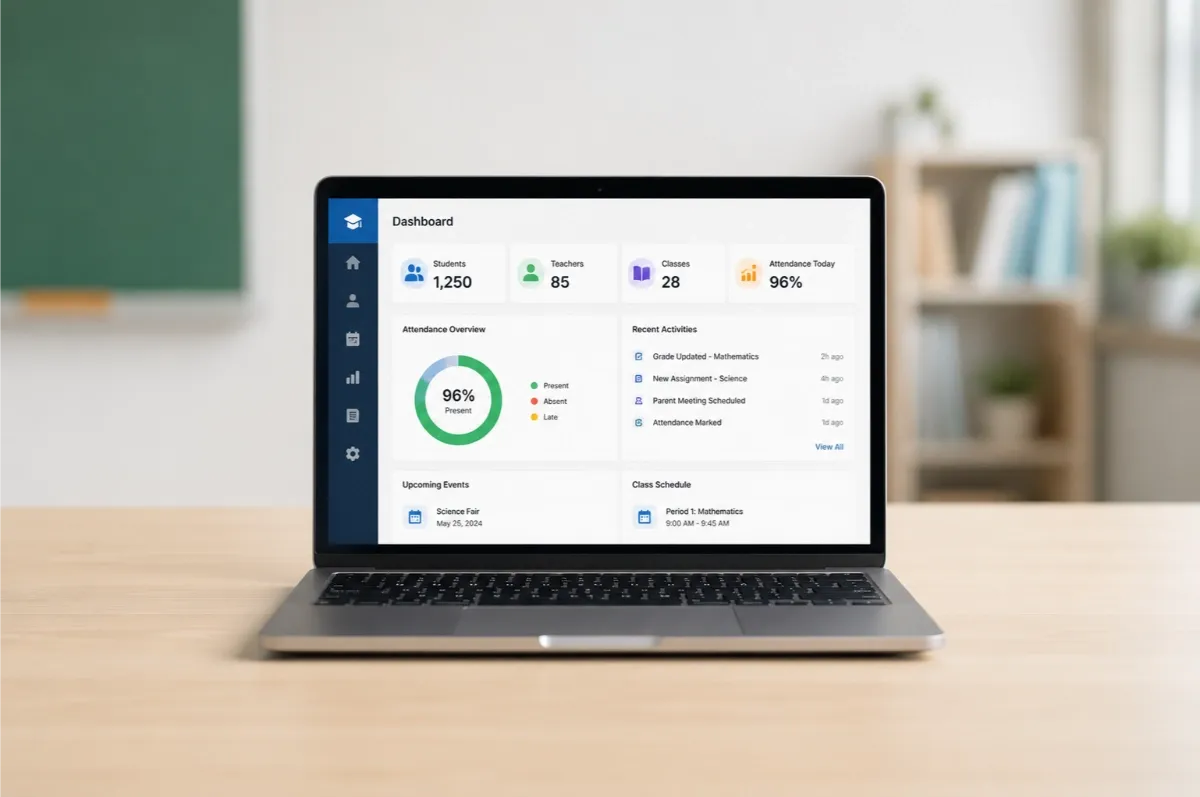
Schools are no longer debating whether to adopt digital systems. The real question is how much of the administrative workload should be automated without taking control away from teachers.
For decades, educators have spent a significant portion of their day on tasks that have little to do with teaching. Taking attendance, calculating grades, resolving timetable conflicts, sending updates to parents, and maintaining student records consume valuable hours that could otherwise be spent supporting students.
Student Information System (SIS) helps schools automate these routine processes. The best SIS platforms handle repetitive tasks automatically while allowing educators to review, adjust, and override outcomes whenever necessary.
Attendance: From Manual Roll Call to Smart Tracking
Attendance is one of the most time-consuming administrative tasks in any educational institution. Traditional methods often involve manual registers, spreadsheets, and follow-up processes that consume valuable classroom time while increasing the risk of errors.
Modern Student Information Systems simplify attendance management through tools such as biometric devices, RFID cards, QR codes, mobile check-ins, and facial recognition systems. Attendance data is captured automatically and updated in real time, creating a more accurate and efficient process for teachers, administrators, and parents.
Benefits of attendance automation include:
- Reduced administrative workload
- Improved attendance accuracy
- Real-time notifications and alerts
- Faster reporting and record management
- Better visibility into attendance trends
Grading: Where Automation Helps and Where It Should Stop
Grading involves far more than calculating scores. It requires educators to assess progress, evaluate performance, and provide meaningful feedback. However, many grading-related tasks remain repetitive and time-consuming.
A Student Information System can automate calculations, generate report cards, track assessment performance, and maintain academic records. This reduces manual effort while ensuring greater consistency and accuracy across the grading process.
A well-designed SIS can help by:
- Calculating averages and GPAs automatically
- Generating report cards and academic reports
- Tracking student performance over time
- Maintaining centralized grading records
- Reducing manual calculation errors
Scheduling: Letting Software Handle Complexity
Creating school timetables is often a challenging task involving multiple variables, including teacher availability, classroom capacity, subject requirements, examinations, and student groups. Managing these schedules manually can be both time-consuming and difficult to scale.
Modern SIS platforms use intelligent scheduling capabilities to generate timetables automatically, identify conflicts, and optimize resource allocation. This significantly reduces the time spent on administrative planning while improving scheduling accuracy.
Schools benefit from:
- Faster timetable creation
- Reduced scheduling conflicts
- Better classroom utilization
- Balanced teacher workloads
- Improved operational efficiency
The Middle Ground Between Full Manual Work and Full Automation
Schools do not need to choose between traditional processes and complete automation. The most effective approach lies somewhere in the middle.
Automation is highly effective for repetitive, rule-based tasks such as attendance logging, report generation, timetable creation, and grade calculations. Human expertise, however, remains critical when making decisions that affect students, academic outcomes, and school operations.
The most successful schools use technology to reduce administrative effort while ensuring that teachers remain actively involved in decision-making. This balance allows institutions to improve efficiency without compromising educational quality.
What Teachers Actually Want From a Student Information System
When schools evaluate SIS platforms, discussions often focus on features and functionality. Educators want systems that reduce paperwork, simplify workflows, and make student information easier to access. They want attendance recorded automatically, grades calculated efficiently, and schedules managed intelligently. Most importantly, they want the flexibility to review, modify, and manage these processes whenever necessary.
Teachers are not looking for software that replaces their role. They are looking for technology that allows them to spend less time on administration and more time engaging with students.
What Parents and School Administrators Actually Want
While teachers focus on classroom efficiency, parents and administrators often have different expectations from a Student Information System.
Parents want greater visibility into their child's academic journey. They expect timely updates, easy access to attendance records, performance reports, and communication channels that keep them connected with the school.
Administrators, on the other hand, focus on operational efficiency. They need centralized data, reporting capabilities, scheduling visibility, compliance tracking, and tools that support informed decision-making.
Signs Your School Is Ready to Adopt One
Many schools continue to rely on spreadsheets, paper records, and disconnected systems. While these methods may work for a period of time, they often become difficult to manage as institutions grow.
Your school may be ready for a Student Information System if you are experiencing:
- Excessive time spent on administrative tasks
- Manual attendance and reporting processes
- Challenges managing student records
- Scheduling conflicts and resource issues
- Limited visibility into academic performance
- Increasing parent communication demands
Addressing these challenges early can help schools improve efficiency while creating a better experience for staff, students, and parents.
How Cubet Designs Student Information Systems Around Teacher Control
At Cubet, a digital transformation company working across industries, we believe educational technology should empower educators rather than replace them.Our approach to Student Information System development is part of a broader focus on Education App Development for schools and EdTech businesses, one that spans learning management, personalized content delivery, and academic administration.
We build SIS solutions that streamline attendance management, grading workflows, scheduling, reporting, and communication through a centralized platform. Every solution is designed to support the unique needs of educational institutions while ensuring teachers and administrators remain at the centre of decision-making.
By combining automation with flexibility, Cubet helps schools create efficient, scalable systems that improve operations, strengthen collaboration, and allow educators to focus on delivering better learning experiences.

Mathews Abraham
VP - Revenue & Growth





Get in touch
Kickstart your project
with a free discovery session
Describe your idea, we explore, advise, and provide a detailed plan.