JEV - The Fast Decision Layer in AI Agents


AI agents are getting better very quickly. They can read documents, write code, call APIs, browse websites and even make changes to systems. But there is one thing we often overlook: we are asking a large language model to make almost every small decision along the way.
Should I use this tool? Is this request simple or complex? Should I ask for human approval? Is this action risky? Is this task already complete?
Most of these are not really generation problems. They are decision problems.
The problem with the usual agent loop
A typical agent looks something like this:
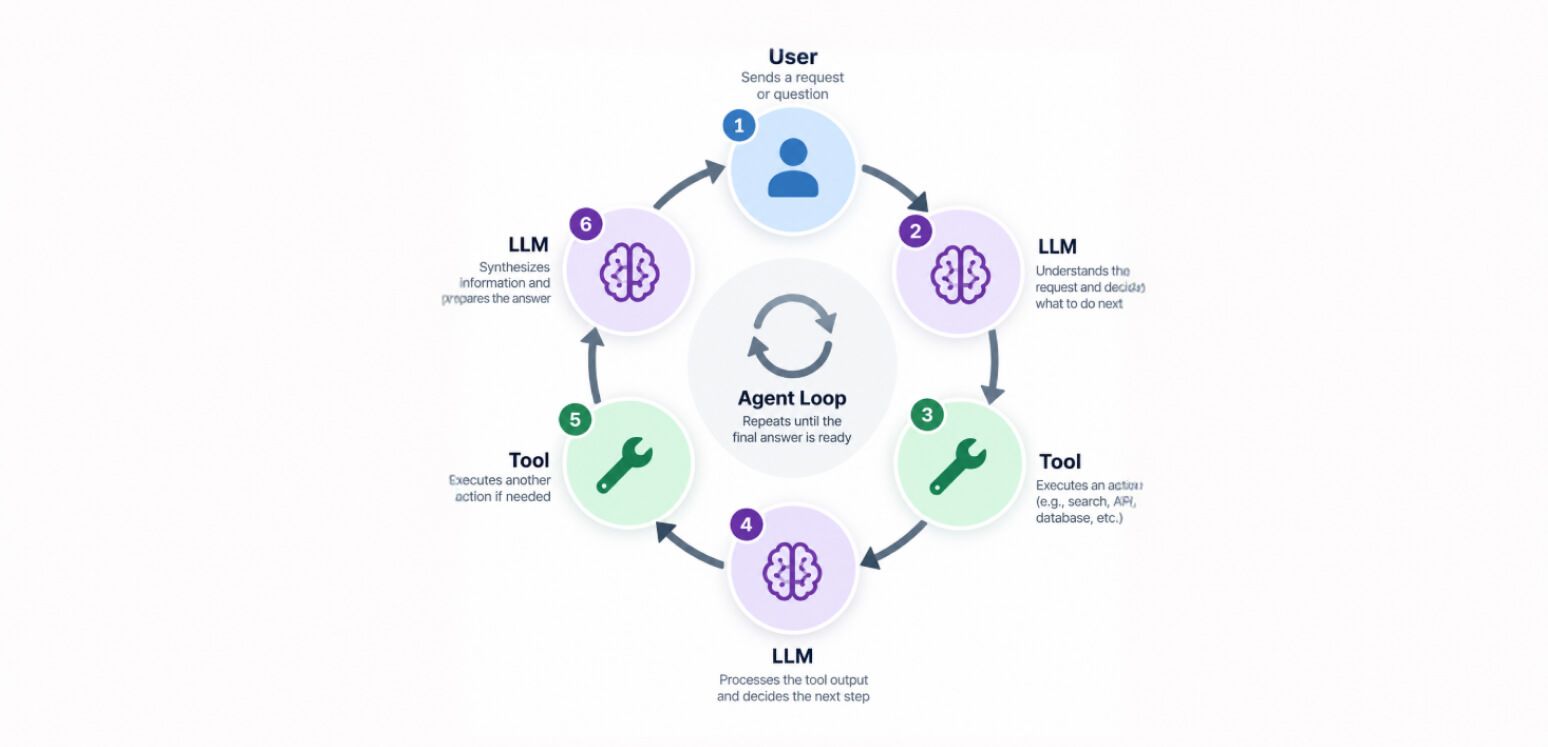
This works, but it can become expensive and slow when the agent performs many steps. Every decision means another model call, more tokens, more latency and another opportunity for the model to make the wrong choice.
Now imagine that the decision is very simple. If the answer we need is just "yes", "no", "model A", "model B" or "needs approval", do we really need a large reasoning model to generate a detailed answer?
Think of it as a fast decision layer
A different approach is to use a small, very fast model whose job is not to write paragraphs. Its job is to look at the current state of the agent and make a structured decision.
For example:
Is this request simple or complex?
Is this tool call safe?
Does this need human approval?
Is this customer issue urgent?
Should this task go to the expensive reasoning model?
The large LLM can then focus on what it is actually good at: reasoning, understanding context, creating content and solving complex problems.
A simpler agent architecture
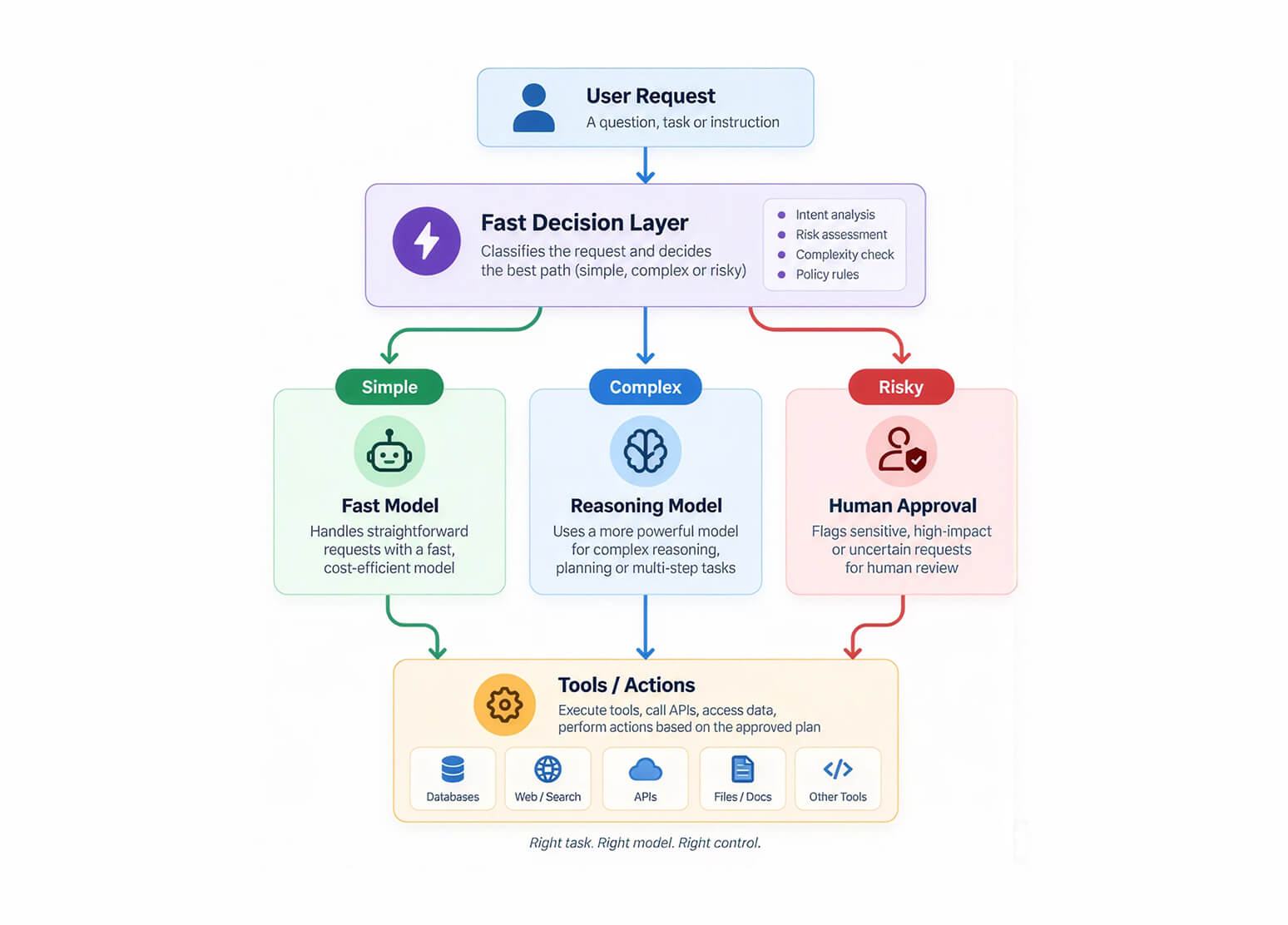
This is an interesting change in architecture. Instead of asking one powerful model to do everything, we give different parts of the system different jobs.
Use case 1: Intelligent model routing
One of the easiest places to apply this idea is model routing.
Consider an enterprise AI assistant. Some requests are straightforward:
What is our leave policy?
Summarize this two-page document.
Extract the invoice number and amount.
Other requests need much more reasoning:
Review this legacy application and suggest a modernization approach.
Analyze this production issue and identify possible root causes.
Design an architecture for this new platform.
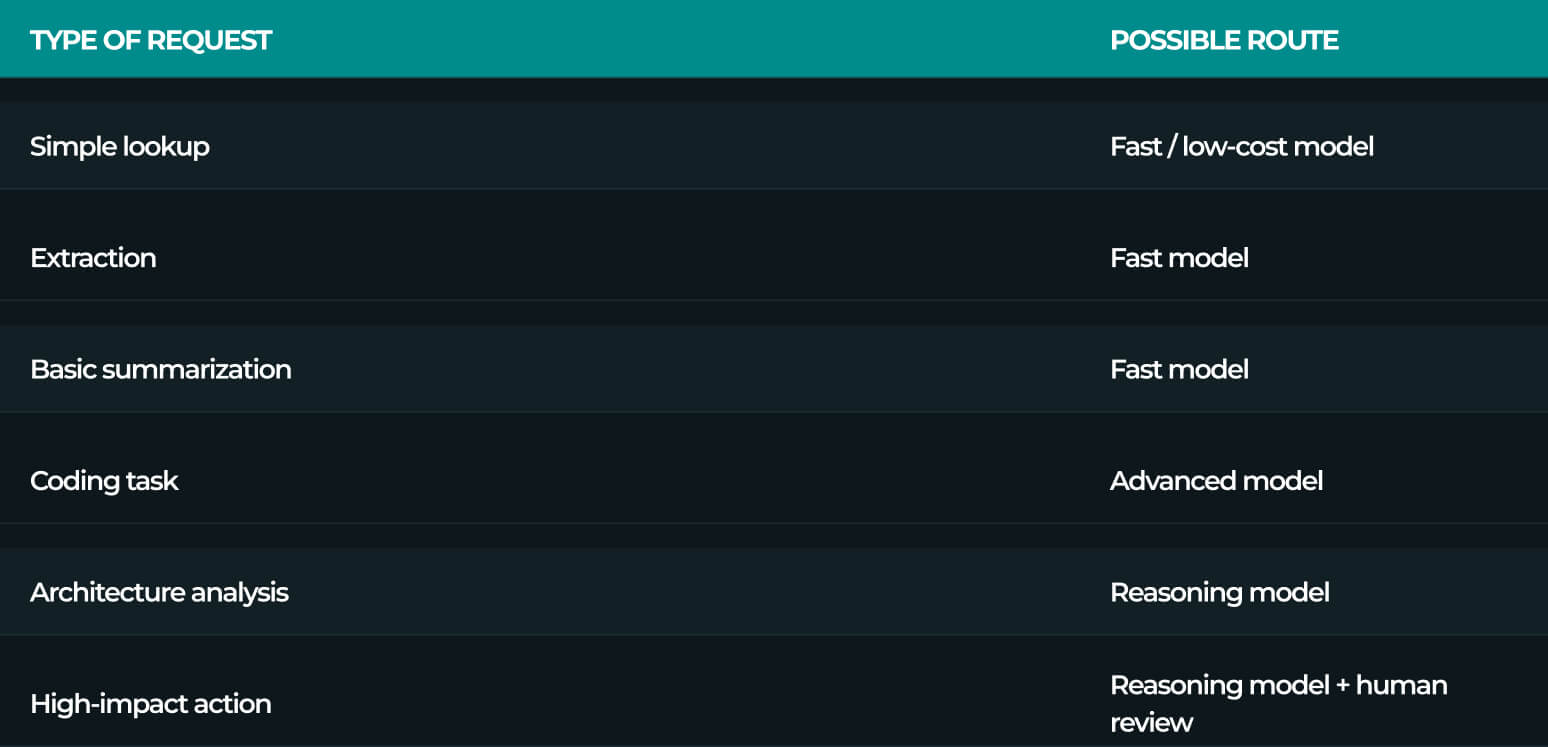
Instead of sending everything to the most expensive model, a fast decision layer can first classify the workload and route it to the appropriate model.
Use case 2: Safety around AI agents
This becomes even more interesting when an agent has access to real systems.
Imagine an AI coding agent that can run shell commands, modify files, push code, access databases and deploy applications.
The agent may decide that it wants to run:
DROP TABLE customer_data;
We probably don't want the same model that proposed the action to be the only thing deciding whether the action should actually happen.
A separate decision layer can check questions such as:
Is this action destructive?
Is this production?
Does it affect a large number of records?
Does the user have permission?
Should a human approve this first?
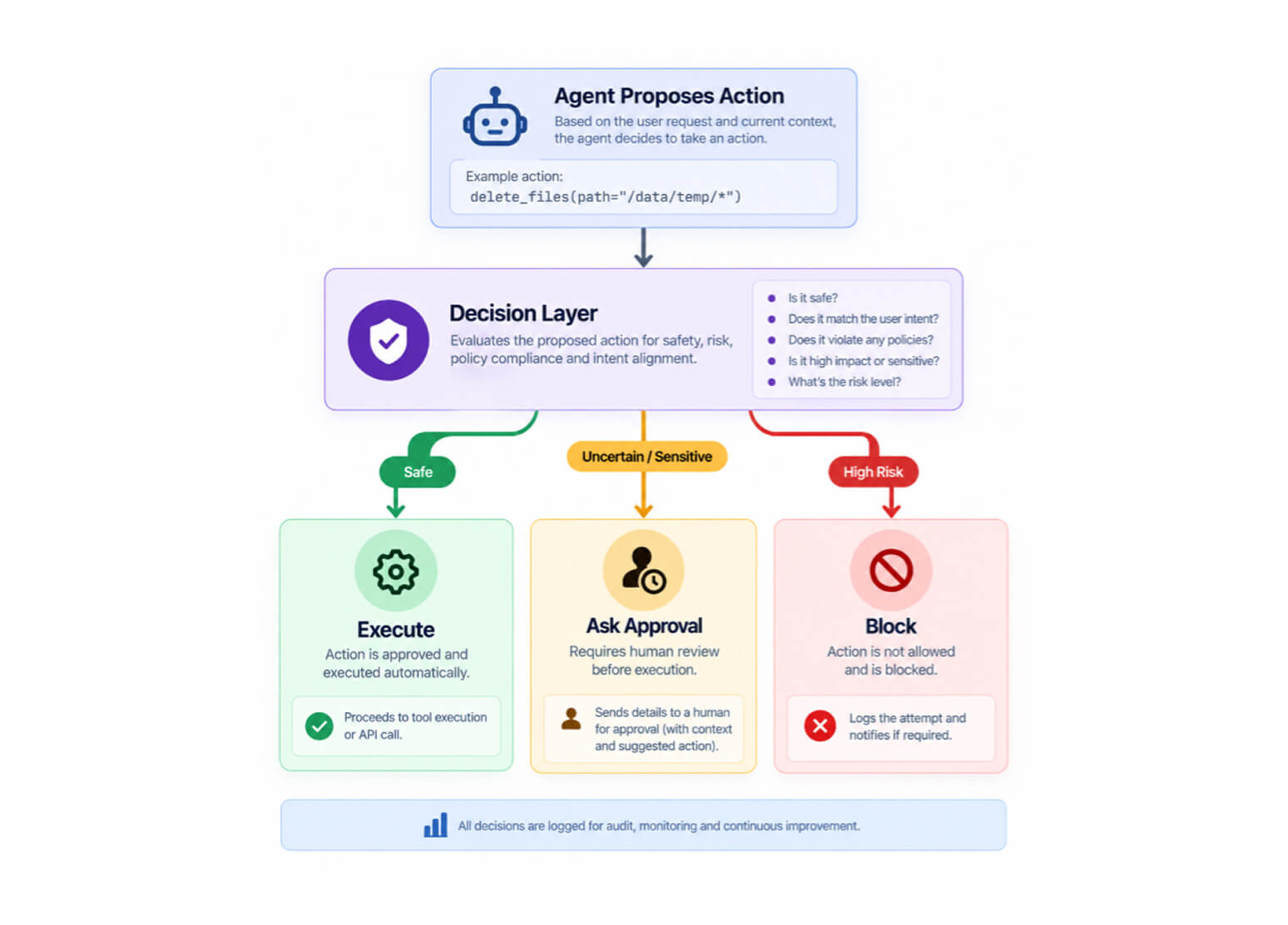
This is a familiar software engineering idea: don't rely on one component to both propose an action and enforce the rules around that action.
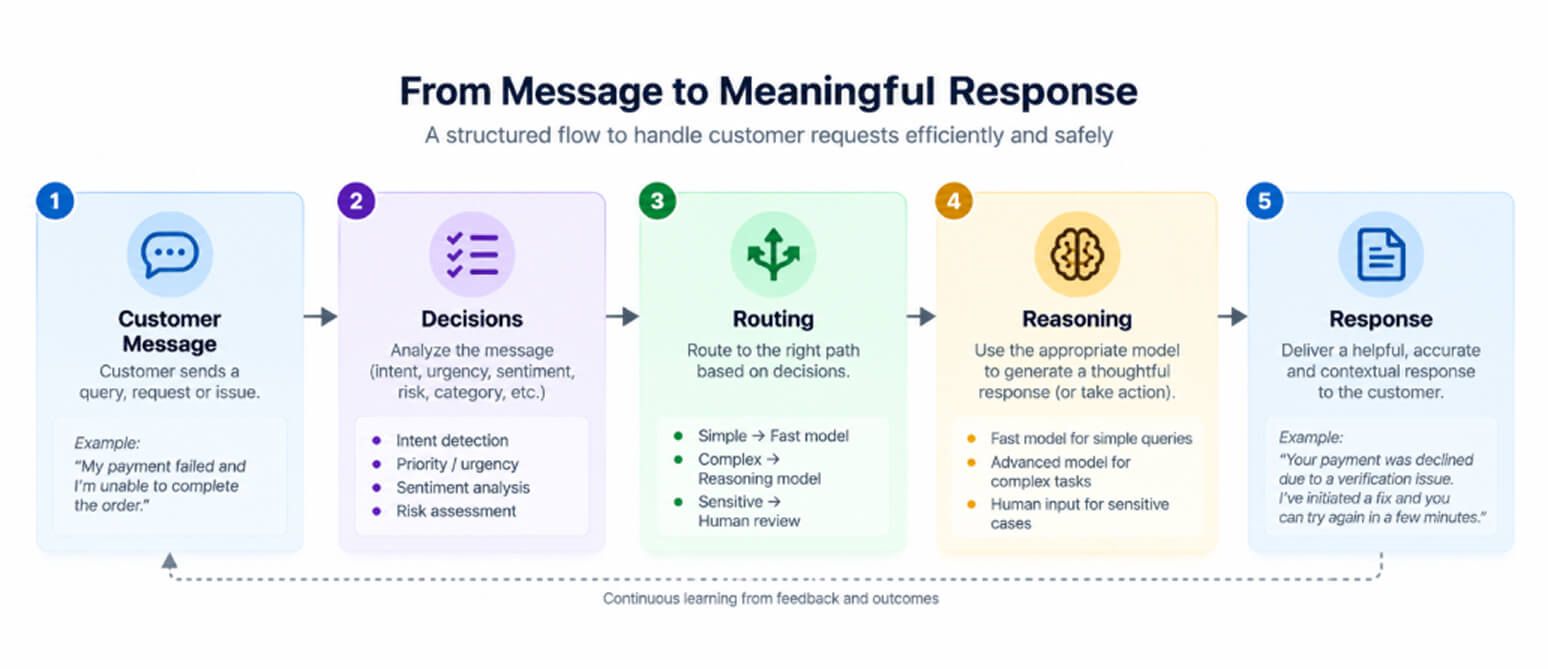
Use case 3: Customer support
Take a customer support agent as another example. When a ticket arrives, we may need several quick decisions:
How urgent is it?
What category does it belong to?
Does it need escalation?
Is it related to billing or a technical problem?
Should it go to a specialist team?
A fast decision layer can handle these classifications first. The larger LLM can then concentrate on understanding the issue and writing a useful response.
Use case 4: Coding agents
This is probably one of the areas where this architecture will become very useful.
A coding agent may perform hundreds of small actions during a task: read a file, change a file, run tests, install a package, create a branch, commit code, push changes and potentially deploy.
Not every action needs deep reasoning. But some actions clearly need more scrutiny.
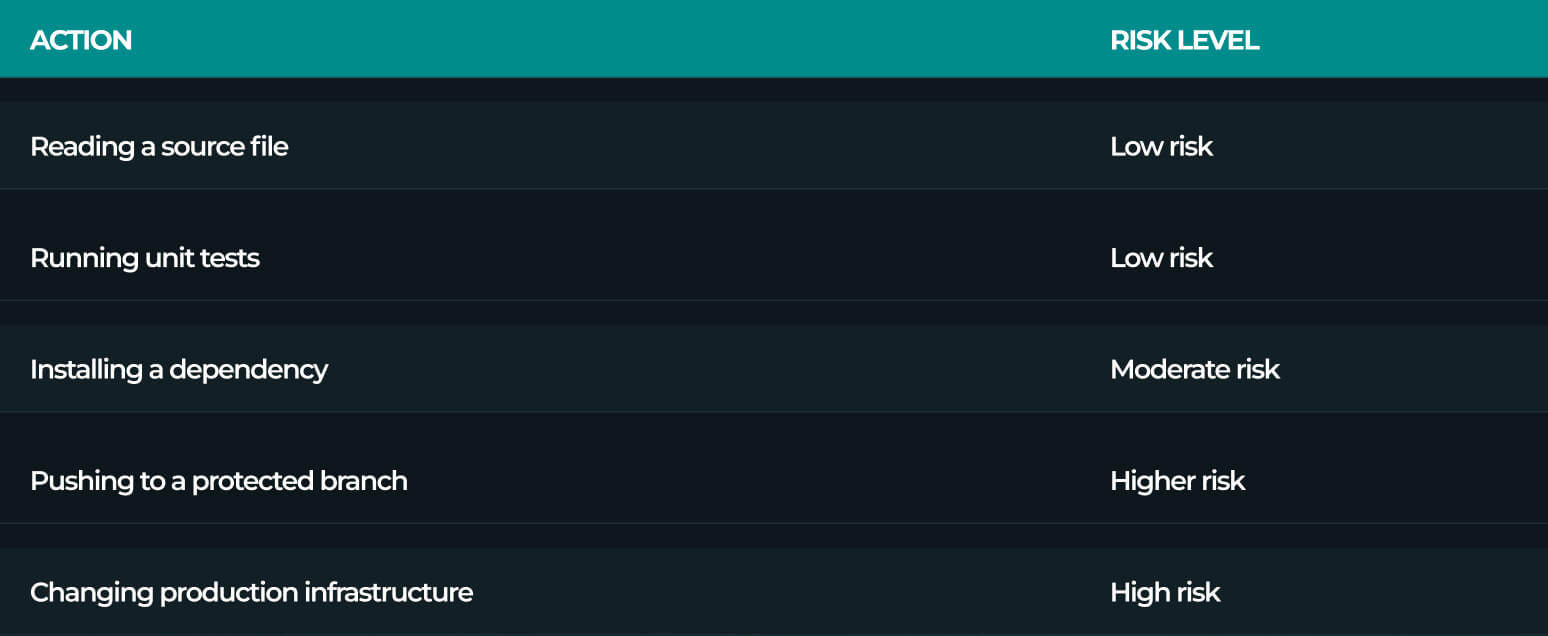
A decision layer can sit between the coding agent and its tools and apply different rules depending on the action.
Why this matters for cost and performance
There is also a very practical reason to look at this architecture: economics.
If an agent makes 50 decisions during a workflow and every one of those decisions goes through an expensive reasoning model, the cost and latency can add up quickly.
If many of those decisions can be handled by a much smaller and faster model, the expensive model can be reserved for the steps where it actually adds value.
The important question is therefore not simply: "Which is the best LLM?"
The better question is: "Which model should handle this particular decision?"
The bigger architectural shift
For a long time, the natural approach to AI applications was:
Application -> LLM
For more mature agentic systems, we may start seeing something closer to:
Application -> Decision Layer -> Reasoning Layer -> Tools -> Governance
That does not mean large language models are becoming less important. In fact, it can make them more valuable. They can spend their compute on the difficult problems instead of being used as a very expensive yes/no classifier.
A useful rule of thumb
If the output you need is simply:
Yes / No
Model A / Model B
Safe / Needs approval / Block
Priority 1 / 2 / 3
Route to Team A / Team B
then ask yourself whether a full generative LLM is really necessary.
Where I think this gets interesting
The really interesting part is not any single model. It is the idea that intelligence does not have to live inside one model.
We can have small models for decisions, large models for reasoning, specialised models for particular domains, traditional software for deterministic rules and humans for decisions that need accountability.
That starts to look less like "an app with an LLM" and more like proper software architecture-with different components doing different jobs.
Final thought
As we build more autonomous AI systems, the winning architecture may not be the one with the biggest model everywhere.
It may be the one that knows where a big model is actually needed-and where a small, fast decision is enough.

Vipin Chandran
Chief Technology Officer, Cubet





Get in touch
Kickstart your project
with a free discovery session
Describe your idea, we explore, advise, and provide a detailed plan.