Alis AI 2.0 — Relearning How the First Sales Conversation Should Work

When we built the first version of Alis, we were trying to fix something that had bothered us for a long time.
Websites get traffic, but conversations don’t happen the way they should. Either nothing happens at all, or visitors are pushed into stiff chatbot flows that feel more like forms than conversations.
Alis 1.0 was our attempt to change that.
What Alis 1.0 Was Built For
Alis started as an AI agent for sales and customer first point of contact. The idea wasn’t automation for the sake of it. The idea was simple: could an AI talk the way a salesperson does in the first few minutes of a real conversation?
Version 1 focused on mimicking natural conversation patterns. It wasn’t designed as a decision tree or a scripted bot. It asked questions the way people do and responded in a way that felt more organic.
We intentionally avoided the usual chatbot feel. And it worked.
Across websites where Alis was deployed, we saw a noticeable jump in people initiating conversations. Visitors were far more willing to engage compared to traditional chat widgets.
That told us we were heading in the right direction.
The Problem That Became Hard to Ignore
Even though conversations were starting, many of them didn’t go very far.
When we looked closely at where drop-offs were happening, one moment kept showing up. The CTA.
Asking for name and email at the start of the conversation made sense from a lead-capture point of view. But in practice, it changed the tone of the interaction.
What felt like a conversation suddenly felt like a gate. Visitors weren’t rejecting Alis. They were reacting to the timing. The request came too early, before trust was built and before the problem was even discussed.
That wasn’t the experience we wanted to create.
Rethinking What Alis Should Actually Do
With all the learning, we stepped back and asked a more fundamental question.
What should Alis really be?
The answer wasn’t “a better chatbot” or “a smarter lead-capture tool.”
The answer was much simpler.
Alis should behave like a good salesperson in their first meeting.
In a real first meeting, nobody starts by asking for contact details. They talk. They explain. They understand context. They validate whether there’s a real problem. Only then does the conversation move forward.
That thinking became the foundation for Alis AI 2.0.
What Alis AI 2.0 Is Today
Alis AI 2.0 is designed to turn every relevant website visit into a qualified meeting, without forcing it.
By qualified, we don’t mean every visitor. We mean visitors who have a real problem, relevant context, and genuine intent.
At a practical level, Alis is an AI agent that lives on your website. It engages visitors 24/7, asks discovery-style questions, and helps them understand your services, solutions, or products. When it actually makes sense, it guides the conversation toward a meeting with your team.
In that process, Alis can engage in almost everything a salesperson would do in a first meeting:
Understand why the visitor is there
Help them make sense of services, solutions, and products
Discuss real problems and use cases
Validate whether there’s a genuine fit
And only then move the conversation forward
We still control what context Alis can discuss and what it shouldn’t. But the flow feels natural, not transactional.
And most importantly, there is no email or name asked at the beginning. Anyone can talk to Alis. This isn’t something that takes months to roll out. Alis can be deployed in weeks, not quarters.
What We’re Really Trying to Do With Alis
With Alis, we’re genuinely trying to help a visitor understand what a business do, their services, solutions, and products, without being sales pushy.
The goal is simple: make the visitor’s life easier.
Alis engages first, explains clearly, and helps the visitor talk through their problem in a way that feels natural. If the conversation makes sense, if it’s relevant, and if the problem and the solution clearly match, only then do we offer a path for further discussion.
There’s no noise.
No privacy hacks.
No sales pressure.
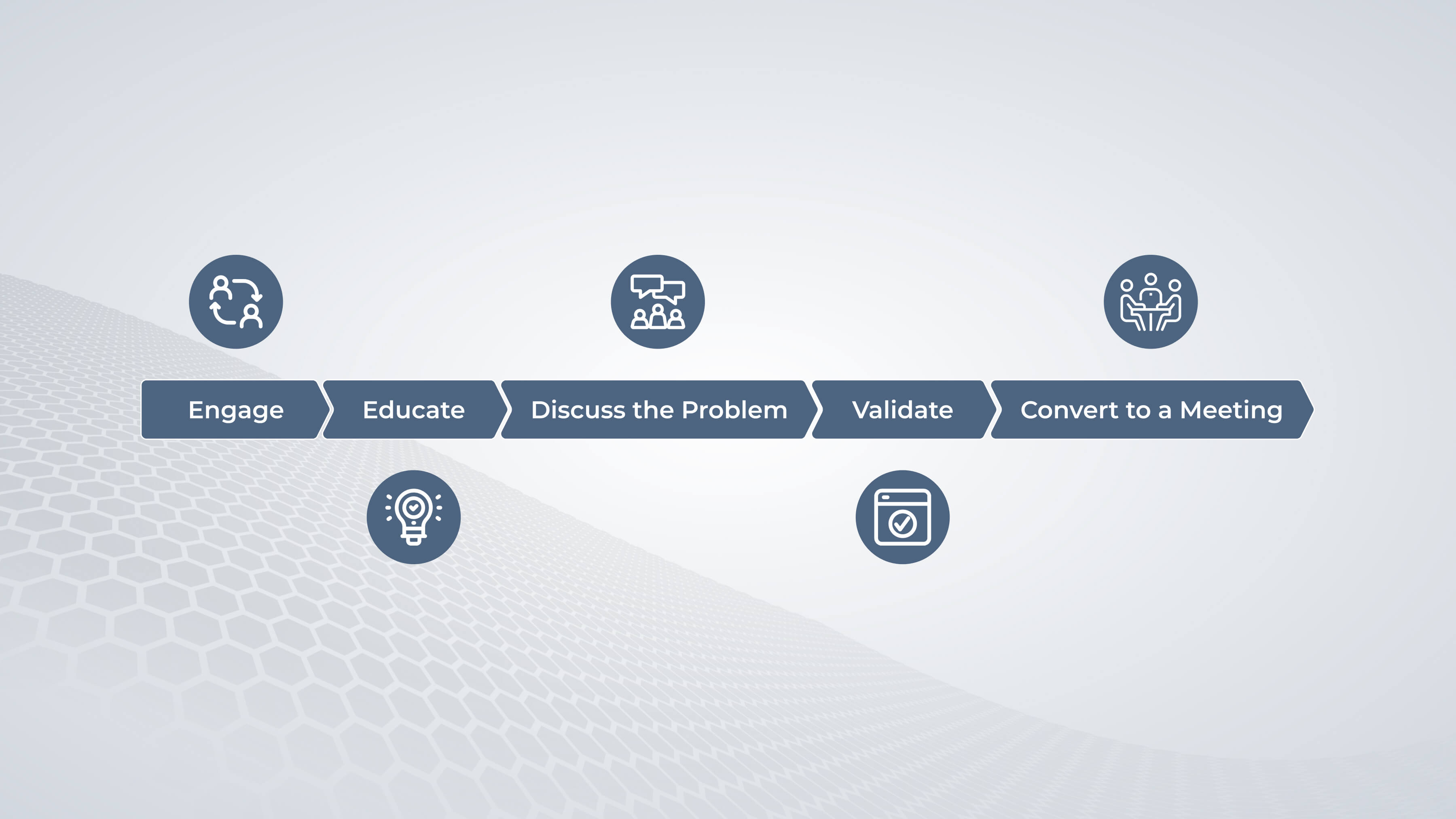
Just a conversation that follows the same flow you’d expect in a real business setting, engage, educate, discuss the problem, validate it, and convert to a meeting when it actually makes sense.
That’s the flow we’ve committed to.
How This Is Different From Traditional Chat Tools
This is where Alis often gets compared to tools like Drift or Intercom.
Traditional chat tools are designed to capture leads. Alis is designed to create a pipeline. Instead of short, surface-level interactions, Alis can conduct proper qualification conversations, closer to what happens in a real discovery call. It captures meaningful context, understands intent, and passes that context to your sales team before they ever step into a meeting.
Alis is account-aware, grounded in your content, and governed by your brand and boundaries. It’s not trying to sound clever. It’s trying to be useful.
What We Learned About Introductions
While studying conversion rates across all marketing agents deployed on customer websites, one insight stood out clearly.
The best-performing agents did one thing differently. Their introduction.
We didn’t just want people to open Alis and leave within 30 seconds. We wanted them to engage with it the way they would be with a real human SDR.
So instead of removing all friction, we focused on removing confusion.
How Alis Introduces Itself Now
Today, Alis opens the conversation like this:
Hi there, I’m Alis 👋 Cubet’s AI Agent
I can answer anything about Cubet, or help you understand how we can help you.
Or we can start with one of these topics:
Services & Solutions
Book a meeting
Cubet updates
Message our team
This introduction is deliberate.
It tells visitors who Alis is, what it can help with, and where to begin. There’s no pressure to type the “perfect” question. People can simply choose a direction and continue from there.
What We’re Building Next: Context Awareness
Right now, Alis understands conversation. The next step is helping Alis understand context.
We’re actively improving Alis’s contextual knowledge capacity, things like how long someone has been on a page, what they’ve explored, and what they seem to be evaluating.
For example, if a visitor has spent time on a specific service page, Alis doesn’t start with a generic overview. It already understands that context and continues the conversation from there.
This isn’t about tracking users for the sake of data. It’s about responding more accurately and more respectfully.
Security and Trust
Because Alis sits at the front of your business, security matters.
Alis is built with enterprise-grade security in mind. Data is encrypted in transit and at rest, customer environments are isolated, access controls are strict, and data flows remain under your control, typically into your own CRM.
Alis is designed to meet modern expectations around privacy, compliance, and trust, including GDPR and SOC-aligned practices.
Launching Alis AI as a Service
Alis AI 2.0 is live on our website today.
We’re now preparing to launch Alis AI as a service, so businesses can deploy Alis on their website homepage or apps as the first line of connection with their users and turn meaningful conversations into qualified meetings.
Not by pushing. Not by gating. But by talking the way real people do.
Have a project concept in mind? Let's collaborate and bring your vision to life!
Connect with us & let’s start the journey
Share this article

Mathews Abraham
Head of Key Accounts





Get in touch
Kickstart your project
with a free discovery session
Describe your idea, we explore, advise, and provide a detailed plan.